

The first time a cleaning crew walks into your home is a little awkward for everyone. You don't know what they'll touch, they don't know where you keep the trash bags, and nobody's sure how long it'll take. Most of that goes away once you know how a first visit actually runs.
This guide takes it in order: the estimate, the questions you'll get, what the first clean covers compared with the visits after it, why it takes longer, the practical stuff like gate codes and dogs, the jobs cleaners won't take on, and what to do if something isn't right. We're Krystal View Cleaning, a family-owned company in Davenport, and this is the same rundown we give new clients across Polk, Osceola, Orange, Lake and Seminole counties.
Step one: the estimate conversation
Almost every cleaning company starts with a quote, and the good ones ask plenty of questions before they give you a number. Some ask for a few photos. Some want to see the home in person, especially for move-outs or a house that needs a lot of catching up. Either way, the questions are about the same, so it helps to have the answers ready:
- Rough square footage, plus the number of bedrooms and bathrooms
- Who lives there, and what pets (a heavy-shedding dog changes the job more than a goldfish)
- When the home last had a top-to-bottom clean, honestly
- Floor types: tile, luxury vinyl plank, carpet, natural stone
- Extras you want, like the inside of the oven or fridge, interior windows or blinds
- How the crew gets in: gate, lockbox, garage code, alarm
- The two or three rooms you care about most
Be straight about the condition of the house
Nobody's judging. A cleaner who hears 'the shower hasn't been properly scrubbed in about a year' can plan the right amount of time. A cleaner who hears 'it's pretty clean' and finds a year of soap scum has two bad choices: rush it or run long. Neither one is what you're paying for.
This is also your chance to ask questions back. Ask what's on the standard checklist, what counts as an add-on, whether they bring their own supplies, whether you'll see the same people each visit, and what happens if you're not happy. Our guide to house cleaning cost in Central Florida explains the factors that push a quote up or down, and you can request a free estimate for your own home any time.
What a first visit covers that later visits don't
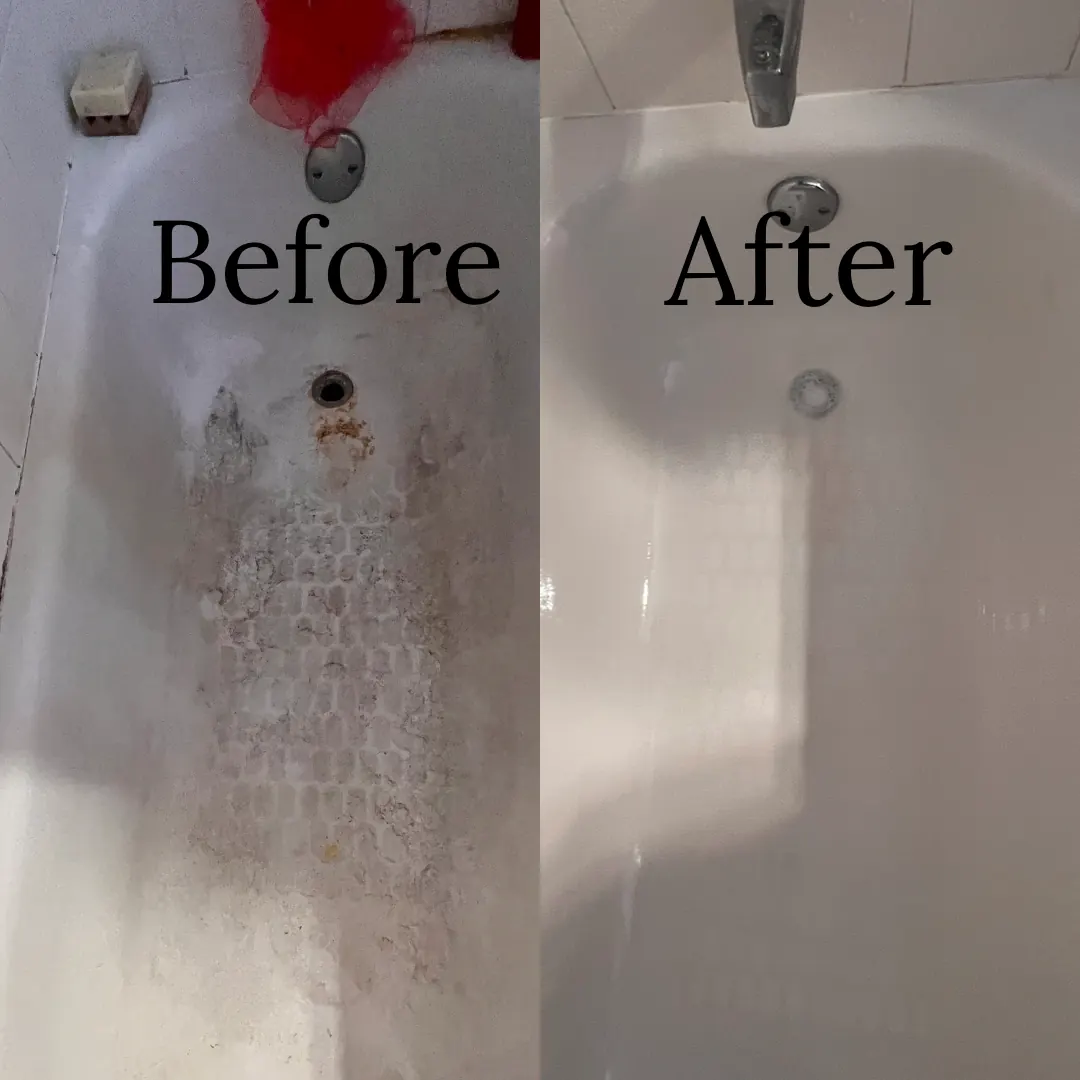
A first clean has to reset the house. On a routine visit, the crew wipes surfaces that were cleaned two weeks ago. On a first visit, those same surfaces might be carrying months of kitchen grease, dust and hard-water film, and there are spots a quick clean never reaches at all.
That's why many people book the first visit as a deep clean or a one-time cleaning, then move to a lighter standard house cleaning on a schedule. The first visit gets the home to a baseline. Later visits keep it there, which takes far less time than starting from scratch each time. If you're torn between the two, our comparison of standard cleaning vs. deep cleaning goes room by room.
Here's what typically gets extra attention on a first visit:
- Baseboards and door frames hand-wiped, not just dusted
- Shower glass, grout lines and fixtures where hard-water buildup has set in
- The range hood, backsplash and cabinet fronts near the stove
- Ceiling fans, air vents and the tops of door frames
- Sliding door tracks, which collect sand and dead bugs in most Florida homes
- Inside the oven, inside the fridge, interior windows and blinds, if you add them
Why first cleans take longer
Buildup is the big reason. A film of grease or a ring of hard water comes off in layers, and every layer is another pass with a cloth or brush. Grout that's been gray for a while needs a cleaner to sit and work before anyone scrubs it. None of that can be rushed without leaving it half done.
The second reason is that the crew is learning your home. They're figuring out where the outlets are, which surfaces are stone and which are laminate, where you want things put back, and which room you said mattered most. By the third or fourth visit, that's all routine. On the first, it costs time.
Published numbers give you a rough sense of the gap. Hellamaid, a cleaning company that publishes a first-visit guide, describes first visits as a little longer than regular ones and puts a medium-sized house at about three to five hours. Crew size matters too: two people finish faster on the clock than one person working alone. Whatever your estimate says, don't schedule the first clean for the morning of a party or a house showing. Give it a day of cushion.
In Central Florida, a few local things add to first-visit time: hard water spotting on glass and faucets, mildew in shower caulk from the humidity, sand tracked in from the pool deck, a spring layer of pollen on window sills, and ceiling fans in nearly every room.
Do you need to be home? Keys, gate codes and alarms
No. For the first visit, though, it helps to be there for the first 10 or 15 minutes, or at least reachable by phone. A short walkthrough at the start is when you point out the rooms that matter, anything fragile, surfaces that need special care (marble, a brand-new floor, an antique table) and any room to skip. After that, plenty of clients head to work and come home to a clean house.
Access is the thing that most often goes wrong, so sort it out a day or two ahead. A lot of homes around Davenport, ChampionsGate and Reunion sit behind a guard gate or a call box, and a crew stuck at the gate is time nobody gets back.
- Gate: add the company to your guest list, or share the call-box steps
- Door: a lockbox code, keypad code or a key left in a spot you agree on
- Alarm: the disarm code, or set it so motion sensors are off for the visit
- Garage: the code if the crew should come in that way
- Parking: any HOA rules about service vans in the driveway or on the street
Pets on cleaning day
Tell the company about every animal in the house, with names and temperaments. A friendly dog that follows the vacuum around is fine. A nervous one is happier in a crate or a closed bedroom, and the crew gets more done without stepping around it. Cats are escape artists: make sure the lanai screen door latches, because doors get opened a lot during a clean.
Mention where the litter box and food bowls are, and whether you want them moved or left alone. If you're worried about products, ask what the crew uses. We clean with Bon Ami and other non-toxic products that are safe around kids and pets. The rest of the prep list, like clearing counters and putting valuables away, is in our guide on how to prepare your home before a cleaning appointment.
What cleaners don't do
Every company draws the line somewhere, and it's better to know before the first visit than to find out during it. Across the industry, crews commonly won't handle biohazards like bodily fluids or large amounts of pet waste, and they won't move heavy furniture. Here's where we draw it, so you can plan around it:
- Carpet steam cleaning or extraction (that's a carpet cleaning company)
- Pressure washing and exterior house washing
- Mold remediation: surface mildew in a shower gets cleaned, but mold inside walls or after a leak needs a licensed remediation company
- Junk removal, cleanouts and hauling
- Outside windows (interior windows are available as an add-on)
- Organizing closets, drawers or paperwork
Cleaners clean around your things, not through them
A crew won't sort your mail or decide which toys go in which bin. If a counter is buried, it gets wiped around. Picking up the clutter before the visit is the single best way to get more cleaning out of the same hours.
Also ask about the high spots before the first visit: a two-story foyer, a fan on a vaulted ceiling, the top of tall kitchen cabinets. Some companies won't go above a step stool. Others, us included, offer high dusting and ceiling fans as an add-on.
After the clean: feedback and the redo guarantee
Walk through the house the same day, in good light, and look at the things you said mattered. Check the shower glass once it's dry, since water spots show up after the glass dries. Look at the stovetop, the bathroom mirrors and the floor under the dining table.
If something isn't right, tell us within a day and we'll come back and redo it free. The 'within a day' part matters. It's easy to tell whether the stovetop was missed that evening, and much harder to sort out a week later after the family has cooked on it.
Specific feedback gets fixed fastest. 'The bottom third of the shower door still has spots' is something a crew can act on. 'The bathroom didn't seem clean' isn't. Preferences count as feedback too: tell us if you'd rather the beds weren't remade, or if the dog bowls go back in a certain spot. If you're wondering about tipping, our guide on how much to tip a house cleaner covers what's normal.
Setting up a schedule after the first visit
Once the house is at a baseline, most people pick weekly, every-other-week or monthly visits. Homes with shedding pets, kids and a pool deck that tracks sand inside usually need more frequent visits than a couple without pets. With recurring cleaning, you get the same team each visit, so the walkthrough you did on day one doesn't have to be repeated. They already know the fragile vase, the room to skip and how you like the towels.


