
Walk through most of the new builds going up around Central Florida and you'll be standing on luxury vinyl plank. It's waterproof, it looks like wood, and it stands up to kids, dogs and wet feet from the pool. It's also easy to keep clean, as long as you drop a few habits people carry over from tile and hardwood.
Waterproof doesn't mean anything goes. The wrong cleaner leaves a dull film, a steam mop may be outside what your manufacturer allows, and sand from the pool deck grinds at the wear layer like sandpaper. Below is what the big brands' own care guides say, how to handle Florida sand, pet accidents and scuffs, and a routine that keeps the floor looking new.
Start by finding out what brand your floor is
LVP care rules change from brand to brand, and sometimes from one product line to the next inside the same brand. Check your closing paperwork, the builder's selections sheet or a leftover box of spare planks in the garage. Then download the care guide and warranty from the manufacturer's site and read the warranty's exclusions.
Here's why it matters. Home Depot's care guide for LifeProof Rigid Core Vinyl SPC flooring (revised July 2021) allows a residential steam mop, as long as the steam goes into a microfiber pad, the mop is on its lowest setting and it never sits in one spot. LifeProof's care guide for its Waterproof Bamboo SPC flooring says flat out not to use a steam cleaner. Same store brand, two different answers.
What the manufacturers agree is safe
The care guides from Shaw, Mohawk, COREtec and LifeProof line up on most of the basics:
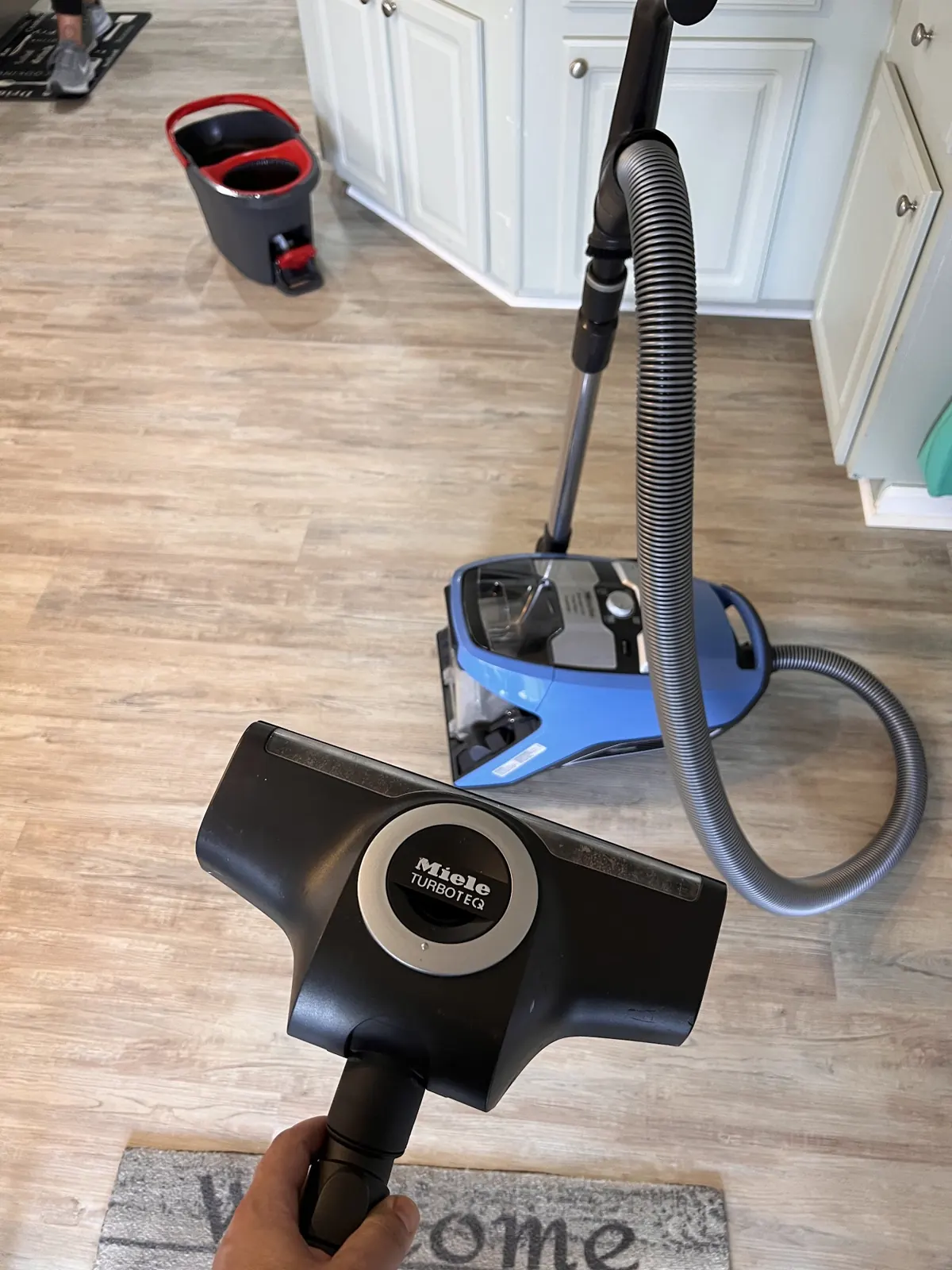
- Dry clean first. Sweep with a soft-bristle broom, use a dust mop, or vacuum on the hard-floor setting. Mohawk, COREtec and LifeProof all say to skip vacuums with a beater bar or rotating brush.
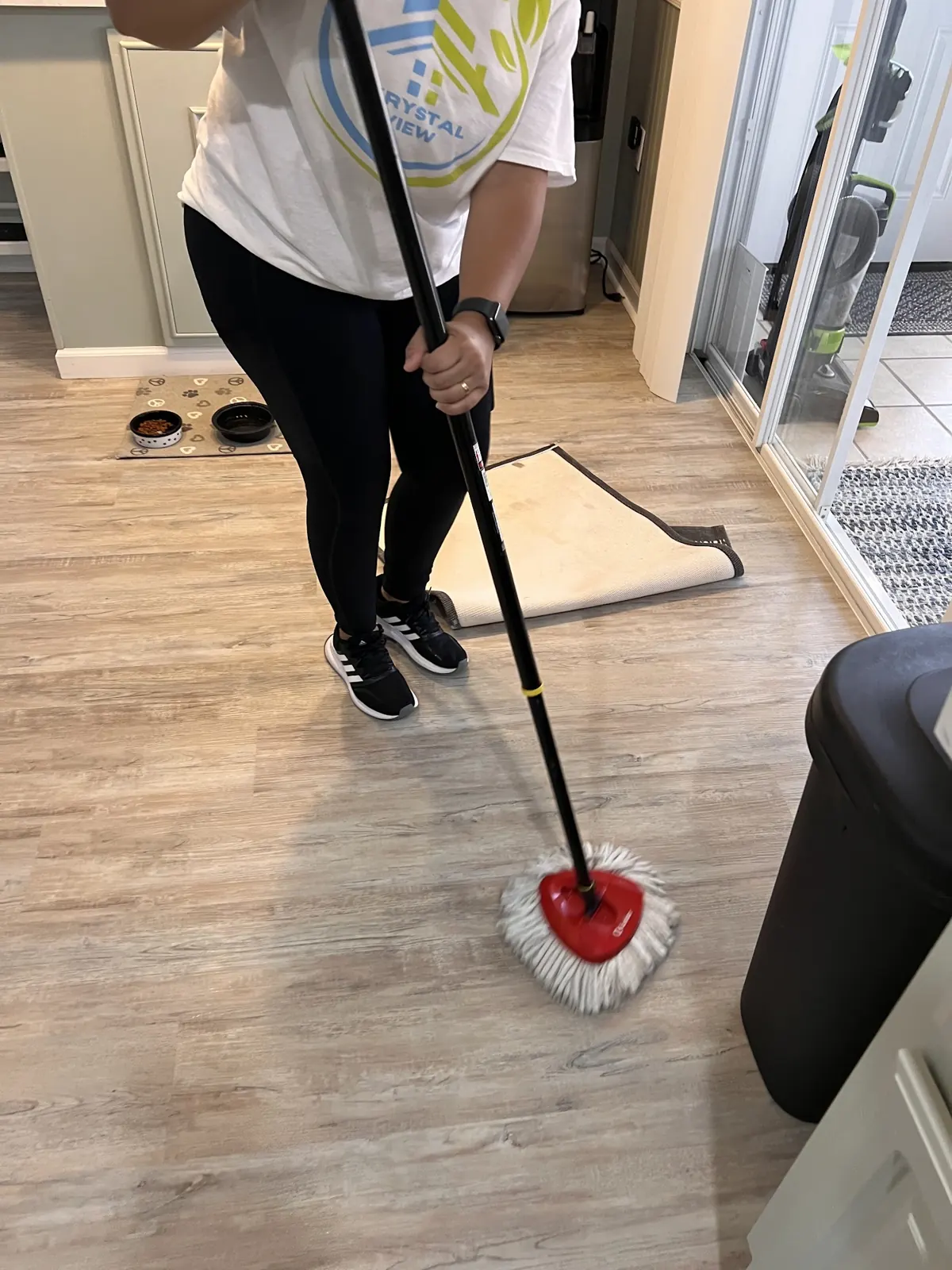
- Damp, never wet. Mohawk says to damp-mop with clean water and a nonabrasive floor cleaner. LifeProof says to put the solution on the mop, not on the floor. Shaw's floor care page warns against drenching vinyl with an overly wet mop.
- Use a pH-neutral cleaner. Shaw and COREtec both call for a neutral pH cleaner (each sells its own).
- Rubbing alcohol for stubborn spots. Shaw and COREtec suggest isopropyl alcohol on a clean white cloth. LifeProof's bamboo SPC guide gives a mix of one part rubbing alcohol to two parts distilled water for moderately soiled areas.
- Blot spills right away. Shaw, COREtec and Mohawk all say not to leave liquids sitting, waterproof or not.
Central Florida's hard water and LVP
Our tap water is hard, and the minerals in it dry into a faint haze when you mop with too much of it. LifeProof's care guides suggest distilled water for lightly soiled floors, and that's a useful trick here. If the floor looks cloudy after mopping, go over it once with distilled water and a clean, well-wrung microfiber pad, working in the direction of the planks (another LifeProof tip). Our guide to hard water stains in Central Florida covers the same problem on glass and fixtures.
What can damage the floor or void the warranty
Most LVP warranties exclude damage from improper maintenance, and some name specific tools. The limited warranty for Malibu flooring (sold at Home Depot) lists damage from steam mops and vacuum beater bars as not covered. Stainmaster's vinyl warranty (sold at Lowe's) excludes warping, curling and delamination caused by excessive heat. Floor Coverings International's LVP care guide notes that many luxury vinyl warranties exclude steam-cleaning damage. These are the habits to drop:
- Steam mops, unless your care guide allows them in writing. Shaw lists steam mops as not recommended for its vinyl, COREtec says to use one only where its own guidelines approve it, and LifeProof's answer depends on the product line.
- Oil soaps. Armstrong Flooring's hybrid resilient care guide lists oil soap among products never to use, and Shaw's resilient care guidance rules out oil soaps too. They leave a slick film that holds dirt.
- Wax, polish and one-step 'mop and shine' products. LifeProof says no cleaning agents with wax, oil, varnish or polish because they leave a dull film. COREtec and Shaw say the same. The factory wear layer doesn't need a coating.
- Vinegar. COREtec says vinegar is acidic enough to harm LVP, and Shaw lists vinegar-based products to avoid. Plenty of DIY blogs recommend it. The manufacturers don't.
- Abrasives. LifeProof rules out steel wool and scouring powder, and Shaw rules out abrasive cleaners. That includes powder cleansers like the Bon Ami we use on tubs and sinks. Save it for the bathroom.
- Ammonia and solvents. Shaw lists ammonia-based products, and LifeProof and Mohawk both say no acetone or nail polish remover.
- Rubber- or latex-backed mats. Shaw, COREtec and LifeProof all warn they can stain the floor. Use mats with a non-staining backing.
Brands don't always agree, so read yours
Bleach is a good example. Mohawk's luxury vinyl care sheet allows a diluted bleach solution, one part bleach to 10 parts water, for spot stains. Armstrong Flooring's hybrid guide says no bleach at all. If yours allows it, use it only on the spot, never mix bleach with ammonia or acids (vinegar included), open a window, test in a closet corner first, and rinse with plain water afterward.
Sand and grit: the real Florida floor killer
Spills rarely ruin LVP. Grit does. Sand from the pool deck, beach bags and sandy yards gets ground into the wear layer underfoot, and over a year it shows as a dull path from the slider to the kitchen.
Mohawk recommends floor mats at entrances to trap sand, grit and dirt before they spread. LifeProof suggests mats on both sides of exterior doors and area rugs in high-traffic areas, and Shaw says to put walk-off mats at every entrance and clean them regularly. In most Florida homes, the lanai slider is the main entry for sand, so that's where the best mat goes.
- Dry mop or vacuum the entries and kitchen most days, since daily dry cleaning is what Shaw and Floor Coverings International recommend
- Put felt pads on chair and table legs, and check them monthly, since grit sticks in old felt
- Lift furniture instead of dragging it, as Mohawk's guide says
- Keep dogs' nails trimmed, which LifeProof's guides list under preventive care
- Shake out or wash the entry mats every week or two
Pet accidents on vinyl plank
The plank surface is waterproof, but the seams between planks aren't sealed forever. Urine that sits in a seam can work its way down to the underlayment, and that's where lingering odor comes from. Speed matters more than the product. Here's the order:
- Blot it up with white paper towels or a white cloth, as COREtec and Shaw advise for any spill. Don't rub it into the seams.
- Clean the spot with an enzyme cleaner labeled safe for vinyl or sealed hard floors, after testing it somewhere hidden. Follow the label's wait time, but don't flood the area.
- Wipe with a damp cloth and dry completely. Shaw suggests a fan to speed drying after any wet cleaning.
- Skip ammonia-based cleaners. Shaw rules them out for its vinyl, and the smell can draw a pet back to the same spot.
- If the odor keeps coming back, or a plank darkens or lifts, the urine has likely gotten underneath. Call a flooring installer to check whether that plank needs replacing.
Scuffs, scratches and a floor that looks sticky
Black scuffs from shoes usually come off with a dry soft cloth, or a clean tennis ball rubbed along the grain. For anything that stays, Shaw and COREtec suggest isopropyl alcohol on a clean white cloth, then a damp rinse and a dry wipe. Be careful with melamine sponges like Magic Eraser. A Family Handyman flooring expert has warned they can damage the surface of some vinyl plank, so only use one if your care guide allows it. A scratch is different from a scuff: it's in the wear layer, and no cleaner will fix it. Ask your installer about a touch-up kit or a replacement plank.
A sticky or streaky floor almost always means residue from too much cleaner, the wrong product (oil soap and 'mop and shine' are common culprits) or hard-water minerals. Mop once with plain warm water, or distilled water, using clean pads, and dry it. Wash microfiber pads without fabric softener, since COREtec specifically says dust mops should be free of it. One more Florida note: Shaw and LifeProof both advise limiting direct sun on vinyl, so close the blinds on west-facing sliders in the afternoon and move rugs now and then so the floor fades evenly. For more on dogs and cats, see our pet-friendly house cleaning tips.
A routine LVP cleaning schedule
Shaw recommends cleaning vinyl weekly and more often in high-traffic areas. That fits most Florida households. Here's a schedule that works:
- Most days: dry mop or vacuum the kitchen, the entries and the path from the lanai slider; blot spills when they happen
- Weekly: vacuum everything (no beater bar), then damp-mop with a pH-neutral cleaner and a well-wrung microfiber pad
- Monthly: move light furniture and rugs, clean underneath, wash the entry mats and check felt pads
- Every few months: detail the baseboards and corners, and check the seams near the dishwasher, sinks and sliders
- Pollen season, roughly February to April: add extra dry passes near the doors, since pollen and sand come in together
When to hand it off
If you'd rather not do the weekly mop yourself, our standard house cleaning visits include the floors. With recurring cleaning you get the same team each visit, so they learn your floor and where the sand piles up. For a home overdue for a full reset, start with a deep clean. Mention your flooring brand when you ask for a free estimate.


