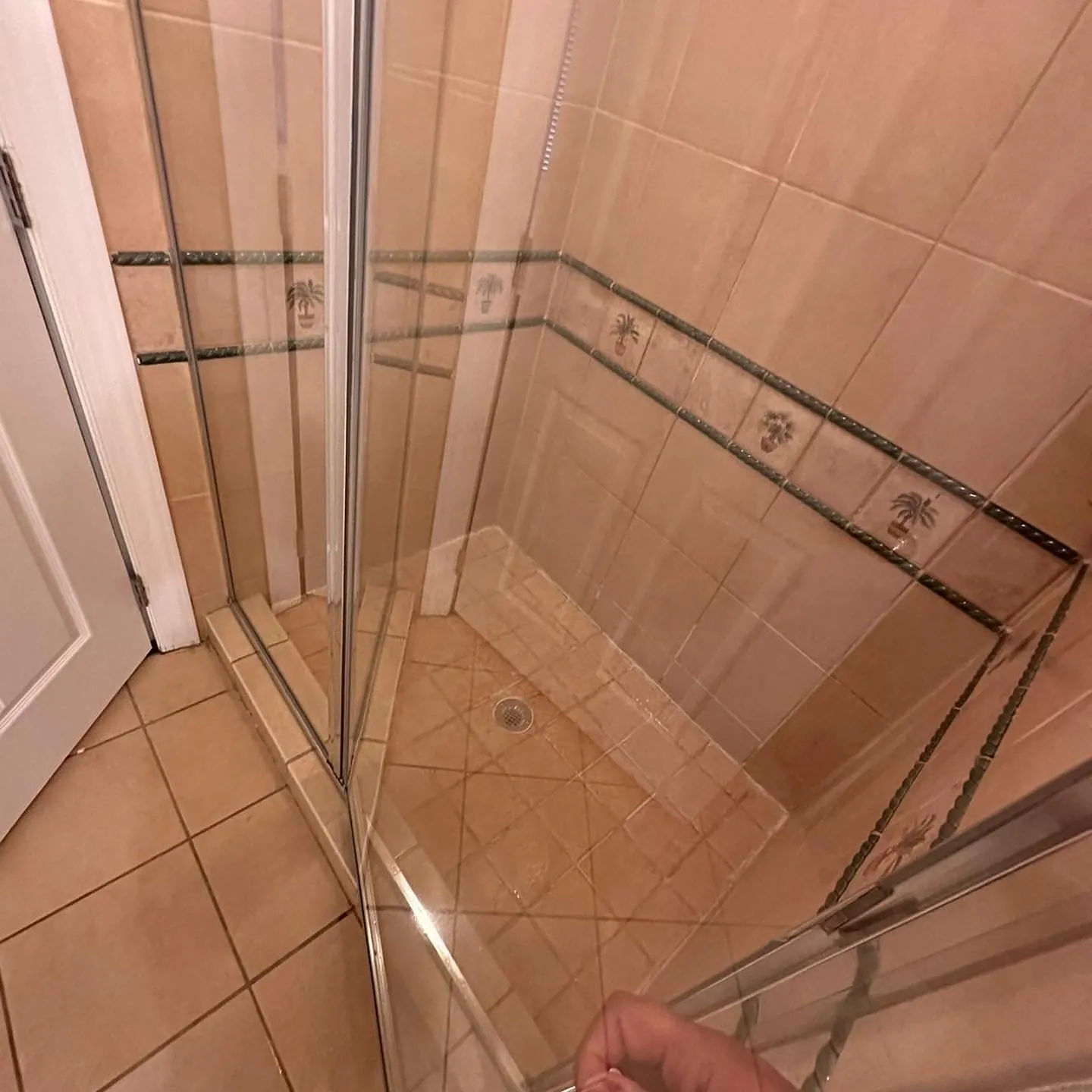
If your glass shower door turns cloudy a week after you clean it, or the showerhead grows a crust of white around every nozzle, you're looking at hard water. Most of Central Florida draws its drinking water from the Floridan aquifer, a huge limestone formation, and water that moves through limestone picks up calcium and magnesium along the way. When it dries on a surface, those minerals stay behind.
Here's what the local utilities actually report about hardness, how to remove mineral scale from the places it builds up most, which surfaces you should never put acid on, and the simple habits that keep scale from building back up.
How hard is Central Florida water?
The best source for your house is your utility's annual water quality report, sometimes called a Consumer Confidence Report. Here's what a few of them say.
Polk County Utilities' 2024 report for its Northeast system, which draws from wells in the Floridan aquifer plus water bought from Toho Water Authority, puts hardness at typically around 124 ppm, or 7.2 grains per gallon. The same report defines water as hard above 120 ppm (7 grains per gallon) and notes that hard water leaves mineral deposits over time. The county's 2025 Northwest system report lists about 130 ppm (7.6 grains per gallon). In Orlando, OUC says its water, drawn from the Lower Floridan aquifer, averages 129 ppm, which it lists as about 7 grains per gallon.
Toho Water Authority's reports for Kissimmee and much of Osceola County that we reviewed don't list a hardness figure, so call the utility if you want an exact number. Third-party sites estimate the area at a similar level, but treat those as rough. If you're on a private well, which is common in rural parts of Polk and Lake, your water can be quite different, and a simple test kit or lab test is the way to find out.
So, by the county's own definition, a lot of homes here are on water that sits right around the line where it's considered hard. That's enough to leave visible spots on glass and chrome within days, especially in a shower that never fully dries.
The ground rules before you scrub
Mineral scale is alkaline, so mild acids dissolve it. White vinegar and citric acid are the two go-to household options. That same acidity is what makes them risky on the wrong surface. Keep these rules in mind:
- Never put vinegar, citric acid or acidic cleaners on marble, travertine, limestone or other natural stone. They dissolve the stone and leave dull etch marks that cleaning won't remove
- Never mix vinegar or any acid with bleach. It releases chlorine gas
- Check the finish on fixtures. Brass, oil-rubbed bronze, matte black and gold finishes can be damaged by long acid soaks, so check the manufacturer's care guide
- Some glass shower doors have a factory protective coating. Skip abrasives and follow the door maker's instructions
- Cement grout doesn't like repeated acid either. Rinse it well after any vinegar treatment
- Ventilate, wear gloves, and test on a small hidden spot first
Glass shower doors
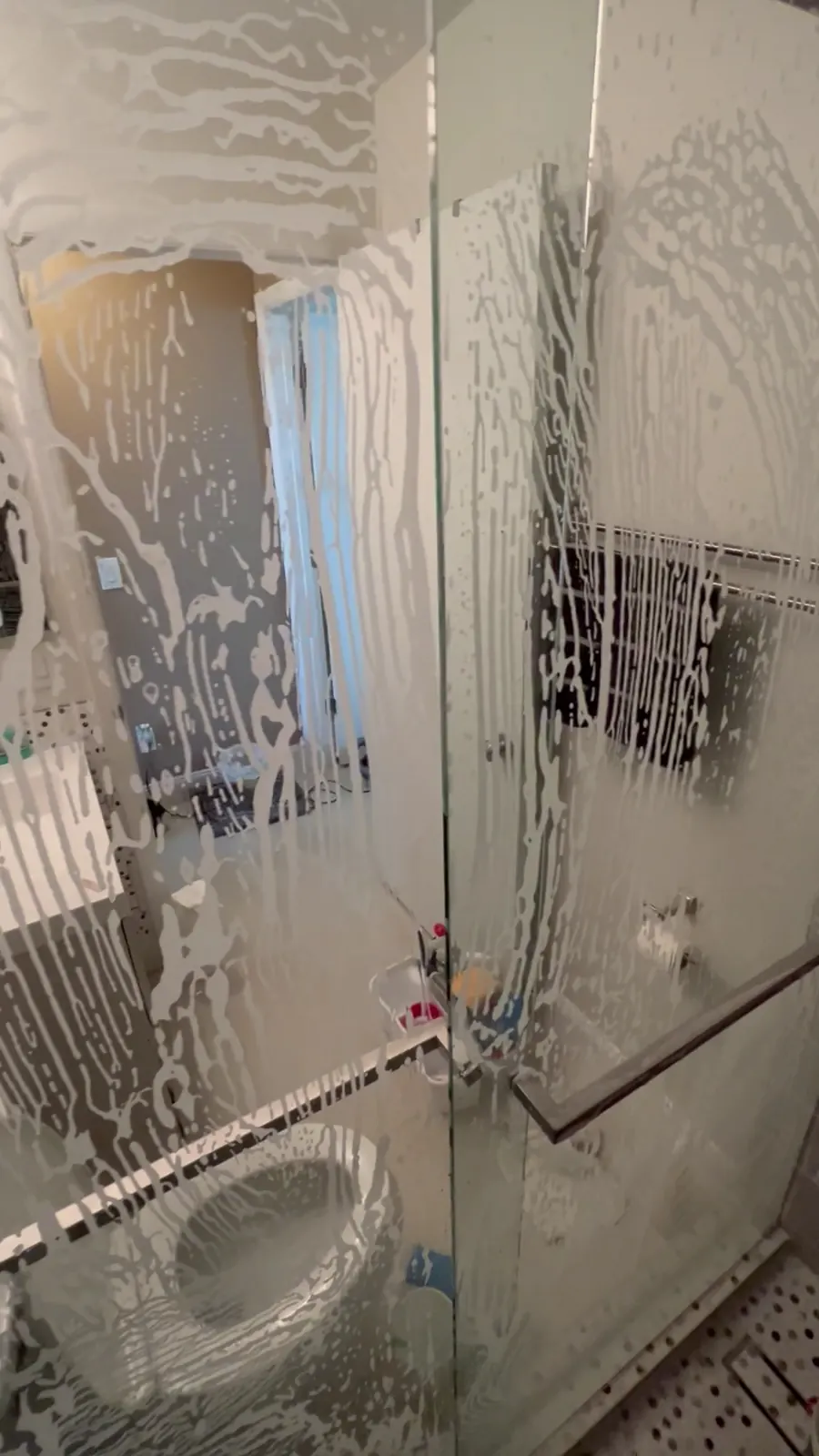
Glass is where hard water shows up worst. For moderate spotting, warm a spray bottle of white vinegar diluted 1:1 with water, spray the glass until it's dripping, and let it sit 10 to 15 minutes. The trick is keeping it wet. Press paper towels against the glass and spray them so the vinegar stays in contact instead of running down the drain. Then scrub with a non-scratch sponge, rinse thoroughly and dry with a squeegee or microfiber towel.
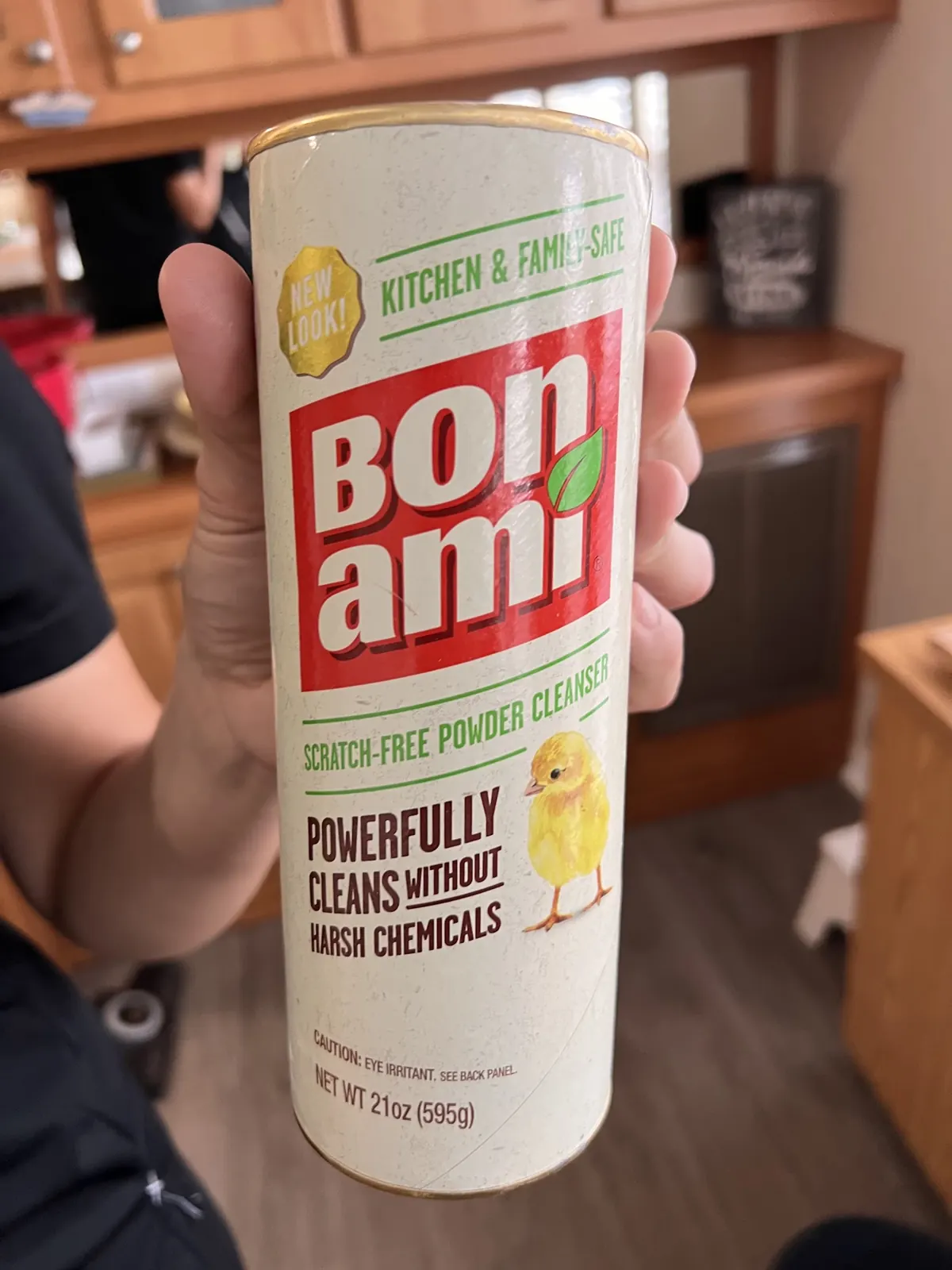
For heavy buildup or if you can't stand the vinegar smell, PRL Glass, a glass supplier, suggests 1 to 2 tablespoons of citric acid powder dissolved in a cup of warm water, left on for 10 to 20 minutes. On uncoated glass, a gentle powder cleanser can help with the last stubborn spots. We use Bon Ami for this because it scrubs without scratching, but test a corner first and rinse well so no haze is left behind.
Don't forget the bottom track and the frame, where scale and soap scum mix into a gray crust. A toothbrush and a few minutes of soaking with your vinegar solution loosen most of it.
Faucets, shower valves and showerheads
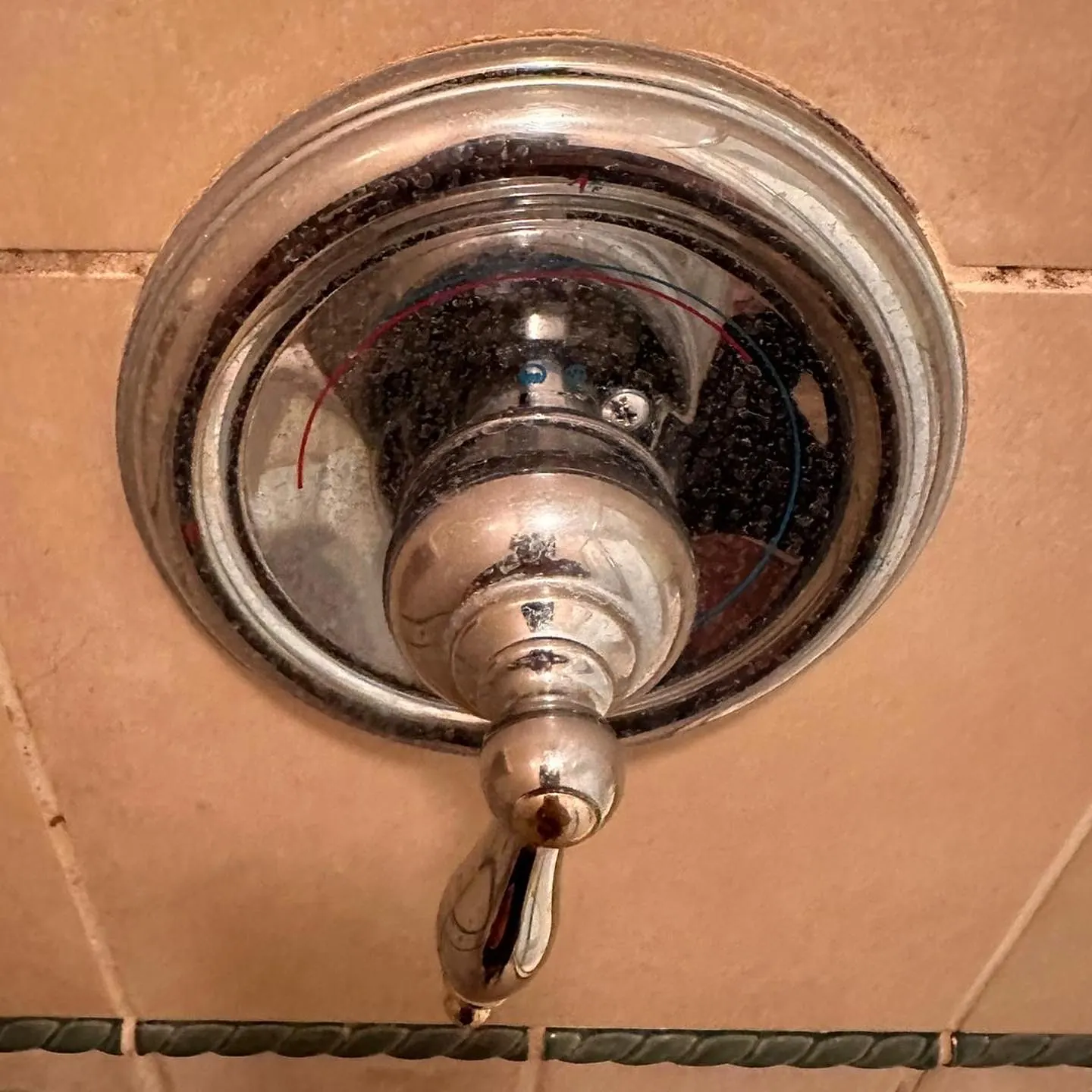
Chrome faucets and shower trim build up a white ring at the base and around handles. Soak a paper towel or cloth in vinegar, wrap it around the fixture, and leave it for 30 minutes to an hour. Then scrub around the edges with an old toothbrush, rinse, and buff dry.
For a showerhead that's spraying sideways or has lost pressure, fill a plastic bag with white vinegar, slip it over the head so the nozzles are submerged, and secure it with a rubber band. Leave it 30 minutes to an hour, longer for heavy scale, as long as the finish can handle it. Run hot water through it afterward and rub any remaining deposits off the rubber nozzles with your thumb. Unscrew faucet aerators and soak them in a cup of vinegar too. They clog with the same minerals.
Toilets
The brown or gray ring at the waterline is usually mineral scale that's picked up stains. Turn off the water supply valve behind the toilet and flush to lower the water level. Pour in white vinegar or lay vinegar-soaked paper towels over the ring, and let it sit for several hours or overnight. Scrub with a toilet brush and turn the water back on.
For a ring that won't budge, a wet pumice stone made for toilets works on white porcelain. Keep it and the surface wet the whole time, use light pressure, and don't use pumice on colored fixtures, plastic seats or anything with a special coating. And again: don't use vinegar in a toilet you've just treated with a bleach-based bowl cleaner. Flush a few times between products.
Dishwashers and cloudy glasses
Cloudy glassware and a white film inside the dishwasher are hard water too. Clean the filter at the bottom of the tub first, since a clogged filter makes everything worse. Then run an empty hot cycle with a dishwasher cleaner, many of which are citric-acid based. Some people use a cup of white vinegar set upright on the top rack instead. Check your dishwasher's manual, because some manufacturers prefer their own descaling products.
Going forward, a rinse aid makes a big difference with hard water, and so does using the right amount of detergent. More detergent isn't better, and leftover detergent can add to the film. For more on the rest of the kitchen, see our kitchen deep cleaning checklist.
Tubs, tile and sinks
Acrylic and fiberglass tubs scratch easily, so skip scouring pads and gritty powders on them. Spray the diluted vinegar solution, let it sit a few minutes, wipe with a soft cloth, then rinse and dry. Glazed ceramic tile handles vinegar fine, but rinse the grout lines well afterward. Enameled cast iron tubs are tougher, though the finish can dull with harsh abrasives over time.
Stainless steel sinks get a cloudy film from hard water, especially around the drain. Wipe with vinegar, rinse, and buff dry in the direction of the grain. A dry sink at the end of the day is the easiest way to keep that film from coming back.
How to keep hard water stains from coming back
Hard water stains form when water dries in place. Stop the drying and you stop most of the buildup. A few habits do most of the work:
- Squeegee the shower glass and walls after every shower. It takes about 30 seconds
- Wipe faucets dry after use, especially in the kitchen
- Use liquid body wash instead of bar soap, which combines with minerals into soap scum
- Do a quick vinegar spray on the glass weekly before buildup hardens
- Run the bathroom fan after showers so surfaces dry faster, which also helps with shower mildew
- Consider a water-repellent glass treatment if your door doesn't have a factory coating
Some homeowners install a water softener, which swaps out the calcium and magnesium for sodium or potassium. It can cut down a lot on scale, but it's a real purchase with ongoing salt and maintenance, so it's worth getting your water tested and comparing a few options first. Plenty of people here get by fine with the daily habits above. The faucets, glass and drains are also on our list of bathroom spots homeowners miss.
When it's time for a professional reset
If scale has been building for months or years, it can take several rounds of soaking and scrubbing to bring glass back. Heavily etched glass may never come fully clear, since the minerals have started to pit the surface. A deep cleaning is where we tackle that kind of buildup on glass, fixtures, tubs and toilets, using the gentlest product that does the job. Vacation homes here see a lot of shower use between turnovers, so our vacation rental cleaning includes keeping glass and fixtures guest-ready. When you're ready, ask for a free estimate.