Short answer: the visible grit from a remodel hits the floor within a few minutes, most of the fine powder from sanding and cutting comes down within several hours of still air, and the very finest particles can float until a filter catches them. So if you close the door on a finished room and leave it overnight, the bulk of the airborne dust will be sitting on surfaces by morning.
The part that confuses people is what happens next. You clean, and three days later there's a gray film on the nightstand again. That usually isn't dust that's still settling from the air. It's dust that already landed on fan blades, inside vents, on top of door frames and in the AC filter, and it's getting knocked loose and redistributed every time the air handler kicks on or someone walks past. Knowing the difference tells you when to clean and how many passes to plan for.
We're Krystal View Cleaning, a family-owned company in Davenport that does light post-remodel cleaning across Polk, Osceola, Orange, Lake and Seminole counties. This guide is about timing: how long the dust takes, when to start wiping, and what your air conditioning has to do with it.
Settling time depends on particle size
Construction dust isn't one thing. Cutting lumber throws off coarse sawdust. Sanding joint compound and cutting tile or stone make a much finer powder, a lot of it measured in single microns. For scale, a human hair is roughly 50 to 70 microns across. Gravity pulls hard on big particles and barely at all on tiny ones, which is why the timelines spread so far apart.
These are rough figures for still air at ordinary ceiling height. Real homes are never perfectly still, so treat them as the fastest case, not a promise.
- Sawdust and visible grit (well over 50 microns): down in seconds to a couple of minutes.
- Coarse dust around 10 microns: roughly several minutes to fall from ceiling height.
- Fine sanding and cutting dust, about 1 to 5 microns: hours. A 1-micron particle can need four hours or more to drop just a few feet.
- Sub-micron particles: may never settle on their own and stay suspended until the AC filter, an air cleaner or fresh air carries them out.
What lead-safety rules say about the first hour
The most careful guidance on waiting for dust comes from lead-paint work, where people actually measure what lands on the floor. HUD's lead hazard guidelines call for waiting at least one hour after dusty work stops before final cleaning, and another hour after cleaning before dust-wipe testing. A study published through the CDC tested this in a sealed chamber after dry sanding and scraping painted doors and found about 90 percent of the airborne dust mass had settled within the first hour.
That's encouraging, but read it carefully. Most of the weight in a dust cloud is the heavier particles, and they fall fast. The fine particles weigh very little, yet they're what leave the soft gray film you notice on dark furniture and glass. So an hour gets the heavy stuff down. For a home cleanup, an overnight wait with the fans off and the work-area door shut gets you much closer to a room where the next wipe will last.
One more note while we're on lead: if your house was built before 1978, the EPA's Renovation, Repair and Painting rule generally requires paid contractors who disturb painted surfaces to be lead-safe certified, and the cleanup steps are stricter. Most homes in the newer vacation-home communities around Davenport and ChampionsGate postdate that cutoff, but plenty of older houses in Orlando, Winter Haven and Lakeland don't. Ask your contractor before work starts.
Why the dust keeps coming back for a week or two
Most dust is down within hours, yet a remodeled house can keep shedding for one to two weeks. That's because settled dust doesn't stay where it landed. It gets picked back up from places nobody wiped, then rides the air for a while and lands somewhere new.
The usual sources are the tops of ceiling fan blades, the upper edge of door frames and crown molding, the inside of light fixtures and globes, supply registers and return grilles, the AC filter itself, and soft things like sofa cushions, curtains and mattresses that soaked up powder during the work. Foot traffic on unwashed floors does it too. Every time a fan spins up or the AC starts a cycle, a little of that reservoir goes airborne again.
So the fix isn't waiting longer. It's draining those reservoirs: cleaning the high spots and vents first, swapping the filter, and then doing a lighter follow-up pass a few days later to catch what was released in between. Our guide to getting rid of post-construction dust covers the hiding spots room by room.
When to start cleaning (and why too early wastes effort)
The most common mistake is cleaning while the job is technically done but the last trades are still coming back. A painter touching up trim, an electrician cutting in one more box, a handyman sanding a drywall patch: each one puts a fresh layer on everything you just wiped. Fine dust also turns to paste on damp surfaces, so a wet wipe in the middle of active work can smear it into grout lines and textured walls where it's harder to get out later.
Here's the timeline we'd suggest for a typical kitchen, bath or flooring job in a lived-in house.
- During the work: keep the work-area door closed, vacuum walkways with a HEPA vacuum only as needed, and skip the deep cleaning.
- When the last dusty task is finished: turn off ceiling fans, put a fresh AC filter in, close the room and leave it at least a few hours, ideally overnight.
- Day 1 or 2: do the main clean, top to bottom, finishing with the floors.
- Days 3 to 7: a lighter touch-up on horizontal surfaces, glass and floors to catch the fallout.
- About two weeks out: check the AC filter again and replace it if it's gray.
- Whole-house renovations: plan on more than one touch-up, because there are more reservoirs to drain.
Your AC is the biggest dust spreader in a Florida house
Up north, people can shut the furnace off for a few days during a remodel. Here the air conditioning runs most of the year, and in a closed-up Florida house it's pulling air from every room through one return and blowing it back out every supply vent. A bathroom remodel at one end of the house can leave dust in a bedroom at the other.
During the work, the most useful thing is to have the crew cover the supply and return vents in the work area with plastic and tape so the system isn't sucking dust into the ducts. Tempting as it is, don't just switch the AC off for days in summer. Humidity climbs fast in a shut-up house here, and you can trade a dust problem for a musty smell or mildew.
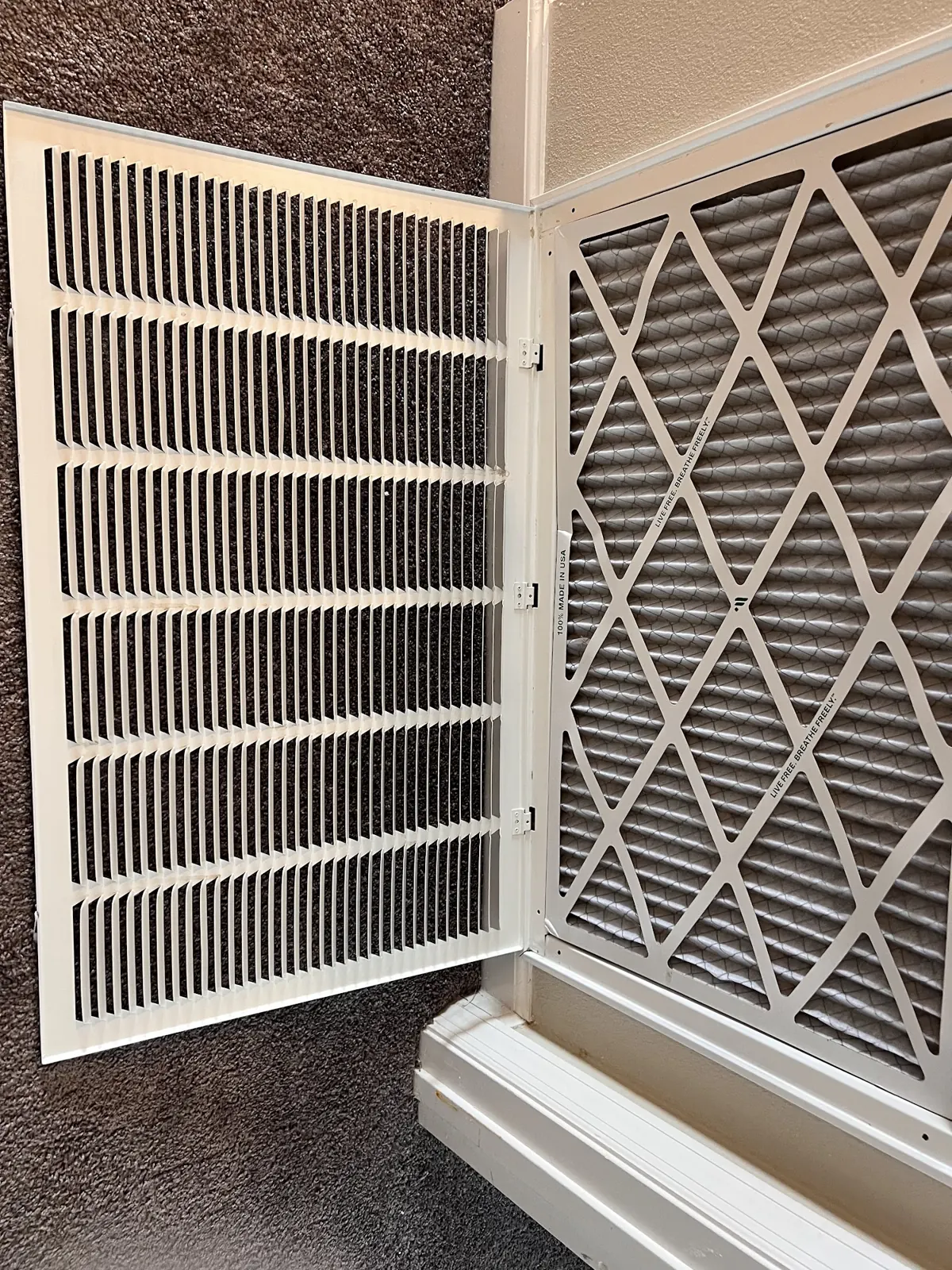
After the work, change the filter before your main clean and again a week or two later. The EPA's consumer guidance suggests a filter rated at least MERV 13, or the highest rating your system can handle, and notes you may need an HVAC technician to tell you what that is. Some older or undersized systems struggle with high-MERV filters, so don't guess. If dust clearly got into the ductwork, duct cleaning is a job for an HVAC company, not a house cleaner.
The right cleaning order once it has settled
Sequence matters more than products. Gravity is working against you if you clean low surfaces first, and wiping thick dust before vacuuming it turns powder into mud. The EPA's lead-safe cleanup steps for homeowners use the same logic: vacuum surfaces with a HEPA vacuum first, then wipe with damp cloths until the cloths come up clean.
- Fans off and a fresh filter in before you start.
- High spots first: ceiling fan blades, the tops of door frames, crown molding, light fixtures and vent covers.
- HEPA vacuum with a soft brush attachment on walls, trim, window sills and tracks. A regular vacuum without a sealed HEPA filter can blow the finest dust right back out the exhaust, and so can most shop vacs.
- Damp microfiber wipe, top to bottom. Wring the cloth until it's barely damp, fold it in quarters and turn to a clean face often. Rinse or swap cloths as soon as they look gray.
- Go easy on fresh paint. New paint stays soft for a while, so wipe lightly and test a hidden spot first.
- Inside cabinets, drawers and closets, where dust drifted in while the doors were open.
- Glass and mirrors near the end, so you aren't polishing them twice.
- Floors last: HEPA vacuum, then damp-mop with clean water you change often. On tile, give the grout lines a second pass.
- Skip the feather duster and dry sweeping. Both just put fine dust back in the air.
Is construction dust harmful?
It's worth taking seriously without panicking. According to NIOSH, drywall joint compound contains ingredients like talc, calcite, mica, gypsum and sometimes silica, and breathing the sanding dust can irritate the throat and airways and cause coughing. OSHA warns that cutting, grinding or polishing stone, tile and concrete can release respirable crystalline silica, and its hazard alert lists engineered stone (the material in a lot of quartz countertops) at up to about 95 percent silica. Those warnings are aimed at workers doing the cutting all day, and a homeowner's cleanup exposure is far smaller, but the same habits help.
Wear a well-fitted N95 or better when you're doing the heavy first pass. Keep kids, pets and anyone with asthma out of the room until the main clean is done. Clean with a HEPA vacuum and damp cloths instead of sweeping. And if someone in the house is having breathing trouble after a remodel, that's a question for a doctor, not a cleaning blog.
Getting help with the cleanup
Plenty of people handle a small bathroom job themselves with a HEPA vacuum and a stack of microfiber. If it's a bigger remodel, a vacation rental with a guest arriving soon, or you just don't want to do the follow-up passes, Krystal View does light post-construction cleaning once the contractors have hauled their debris away: fine dust, vents, fixtures, sills and tracks, sticker residue and floors. If you're planning the job now, our post-construction cleaning checklist lays out what happens in each phase.
Tell us when the last trade finishes and we'll schedule the clean after the dust has had time to come down. Request a free estimate or call +1 877-754-5614.