Shower mildew in Central Florida comes back faster than almost anywhere else in the country. You scrub the grout on Saturday and there's a gray line along the bottom row by the following week. That's not because you're doing it wrong. It's because the air in a Florida bathroom rarely gets dry enough for long enough to stop it.
This guide covers how to get mildew off grout, caulk, glass doors and curtains without wrecking the surfaces or gassing yourself, how to tell when caulk is past saving, and the point where black spots stop being a cleaning job and become a moisture problem for a professional. It finishes with the routine that actually keeps it from coming back.
Why Florida showers mildew so fast
Mildew needs moisture, warmth and something to eat (soap residue and body oils are plenty). A Florida bathroom supplies all three. Outdoor humidity is high most of the year, so after a shower the room has a hard time drying out. The EPA recommends keeping indoor humidity below 60 percent, ideally between 30 and 50 percent, and the CDC suggests no higher than 50 percent. A closed bathroom after a hot shower blows right past that.
A few things make it worse. Interior bathrooms with no window depend entirely on the exhaust fan, and a lot of fans are undersized, clogged with dust or barely pulling air. Vacation homes and snowbird houses sit closed with the AC set high or off, so moisture lingers for days. And grout and caulk are porous, so once growth gets into them, wiping the surface only removes what you can see.
Mildew vs. mold vs. that pink film
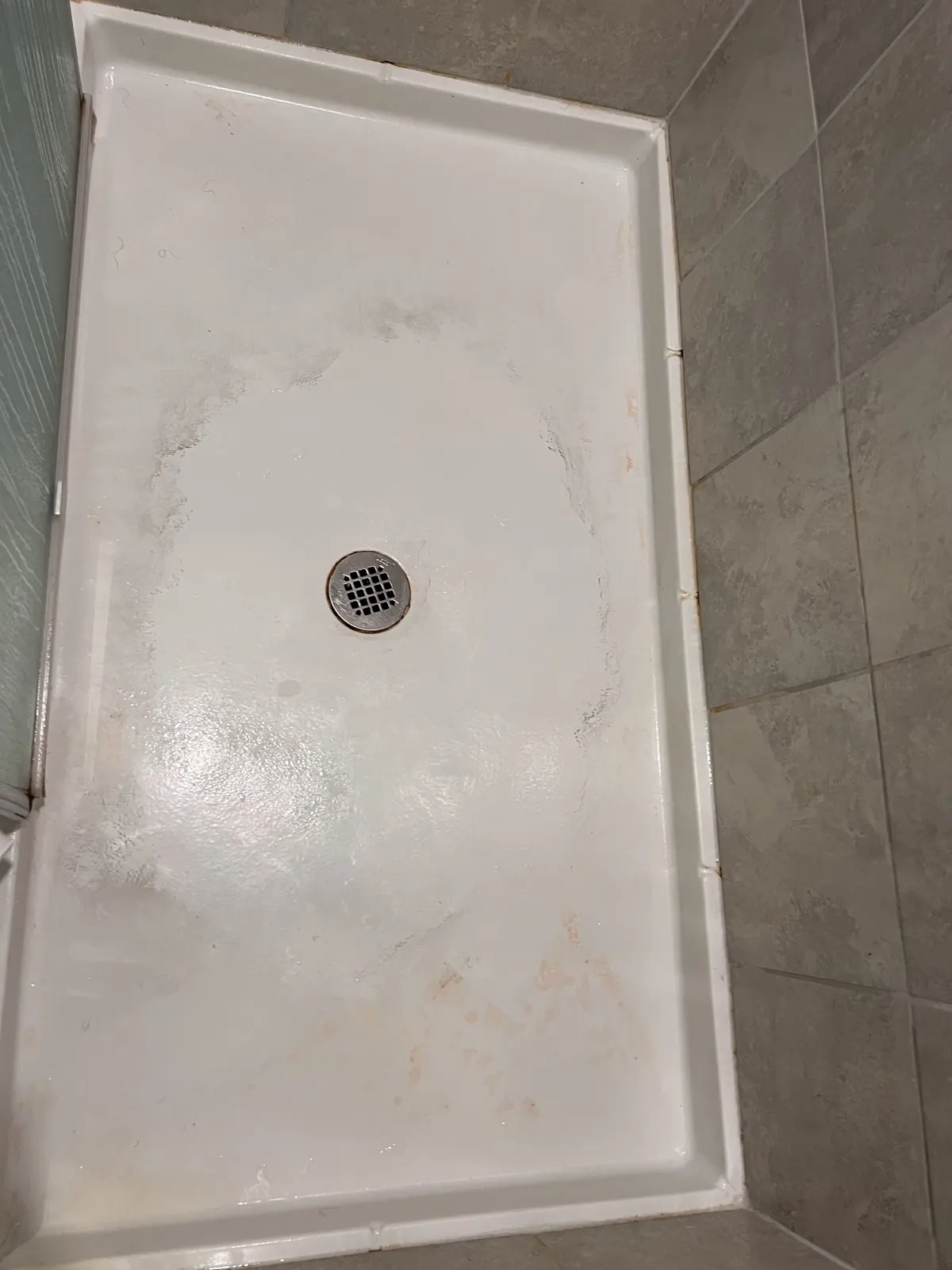
Mildew is the flat gray, black or greenish growth that sits on surfaces: grout lines, caulk beads, the bottom edge of a curtain. It usually cleans off with the right product and some scrubbing. Mold is the broader term and can grow into materials like drywall, wood and the backing behind tile. The pink or orange slime around drains and the bottom of the curtain is usually bacteria, not mildew, but it lives in the same damp spots and cleans off the same way.
The question that matters for you isn't the exact species. It's whether the growth is on a surface you can clean, or in a material you can't. More on that below.
Before you start: safety rules
Bathroom cleaners are strong, and a small, closed shower is the worst place to make a mistake. Keep these in mind every time:
- Never mix bleach with ammonia, vinegar or other acids, or with other cleaners. The CDC warns that mixing bleach with ammonia releases toxic gas, and bleach plus acid does too
- If you switch products, rinse the surface thoroughly with water first and let the room air out
- Run the exhaust fan and open a window or door while you work
- Wear rubber gloves, and eye protection if you're scrubbing overhead
- Spot-test anything new on a small hidden area, especially on natural stone, colored grout or specialty finishes
- Keep vinegar and other acids off marble, travertine and limestone. They etch the stone
How to remove mildew from grout
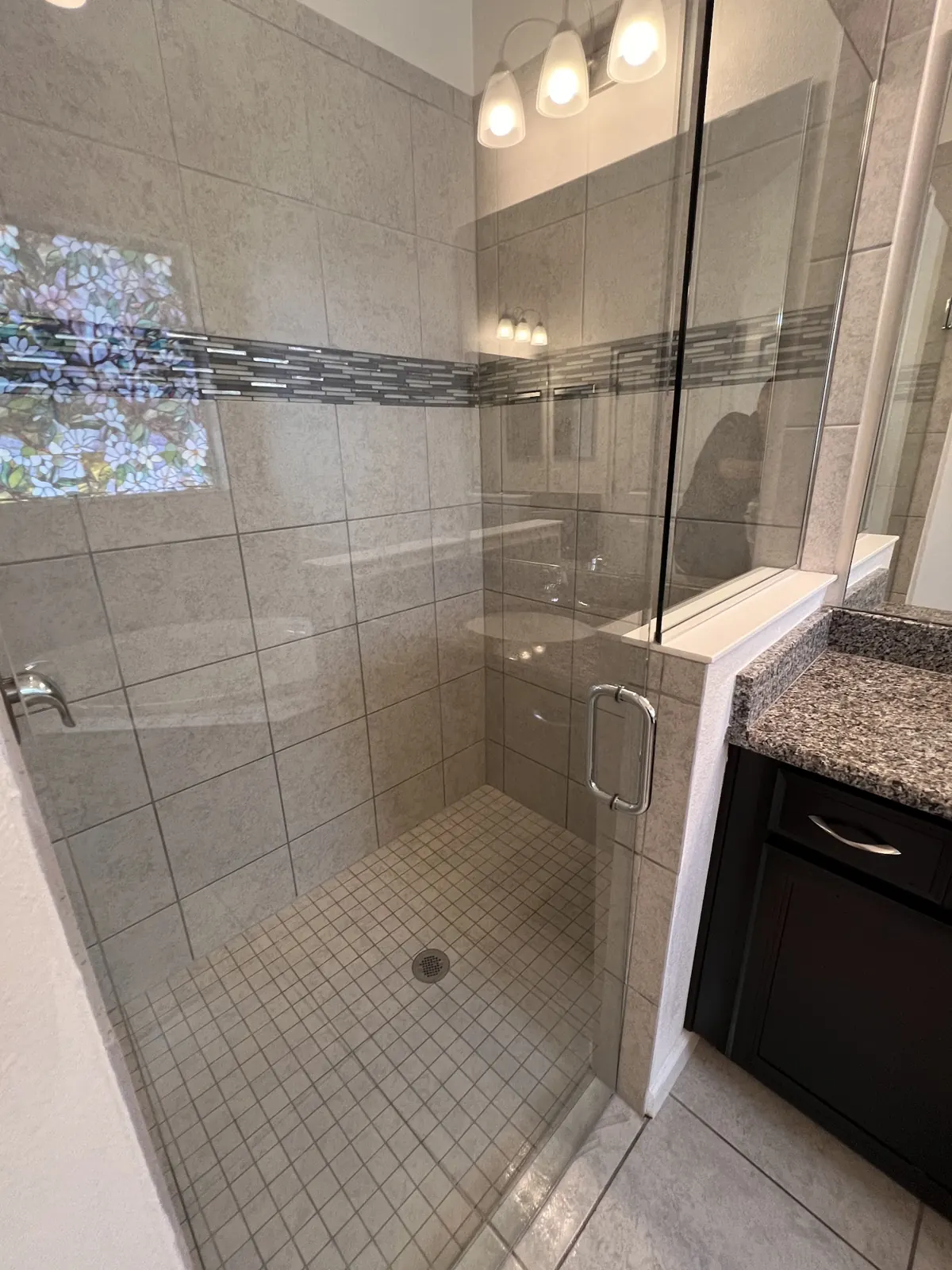
Start with the mildest option and step up only if you need to. Most light gray mildew on grout comes off with a paste of baking soda and water and a stiff grout brush or old toothbrush. Scrub along the line, not across it, then rinse.
For stubborn spots, spray 3% hydrogen peroxide (the brown bottle from the pharmacy) straight on the grout and let it sit about 10 minutes before scrubbing. It doesn't have the harsh smell of bleach and it's less likely to fade colored grout, though you should still test it first.
If that doesn't do it, a diluted bleach solution on white grout is the stronger option. The CDC's guidance for hard surfaces is no more than 1 cup of household bleach per gallon of water. Apply it, let it sit 10 to 15 minutes without drying out, scrub, and rinse well. Then dry the grout with a towel so you aren't leaving it wet. If grout stays dark after a couple of rounds, the growth or staining is deep in the grout itself and regrouting, or a professional grout cleaning and sealing, is the real fix.
How to clean mildew off shower caulk (and when to replace it)
Caulk is soft and flexible, which is exactly why mildew loves it. For surface growth, press a paper towel or cotton pad soaked in the diluted bleach solution or hydrogen peroxide right onto the caulk bead so the product stays in contact, leave it for 15 to 30 minutes, then remove it, scrub gently and rinse.
Here's the honest part most guides skip: if the black spots are inside the caulk, no amount of cleaning will remove them. One sealant manufacturer's simple test is to dab bleach on the stain. If it lightens almost immediately, the mildew is on the surface. If it takes 45 seconds or more, or doesn't change at all, the growth is underneath and the caulk needs to come out.
Replacing it is a manageable DIY job. Cut out the old bead with a utility knife or caulk removal tool, clean the joint, let it dry completely (a fan helps, and in Florida that can mean overnight), and run a new bead of 100% silicone or a caulk labeled mildew-resistant for kitchens and baths. The EPA is clear that you shouldn't caulk or paint over moldy surfaces, so don't skip the cleaning and drying step. Give it the full cure time on the label before showering.
Glass doors, tracks and shower curtains
On glass doors, mildew usually hides in the bottom track, the rubber sweep and the gaskets along the edges, while the glass itself is fighting soap scum and hard water. Pull off the bottom sweep if it slides out, soak it in warm soapy water and scrub it with a brush. For the track, spray your cleaner, let it sit, and work the corners with an old toothbrush. If the glass has white spots that won't budge, that's mineral scale, not mildew, and it needs an acid-based approach. We cover that in our guide to hard water stains in Central Florida.
Fabric shower curtains and most plastic liners can go in the washing machine on warm with a couple of towels to help scrub, then hang them back up to dry fully spread out. Check the care label first. A cheap liner that's spotted all over is often worth just replacing, especially in a rental where it gets heavy use.
When black spots mean a bigger moisture problem
Surface mildew on tile, grout and caulk is a cleaning job. Some signs point to water getting where it shouldn't, and that's a different kind of problem. Take these seriously:
- Black spots come back within a few days of a thorough cleaning, every time
- Growth on the ceiling, the drywall outside the shower, or the bottom of the vanity
- Loose, cracked or hollow-sounding tiles, or grout that crumbles
- Soft or bubbling paint, or a musty smell that seems to come from inside the wall
- A patch that keeps spreading, or any area larger than about 10 square feet, which is the EPA's rough limit for a do-it-yourself cleanup
In those cases you may have a leak, a failed shower pan or moisture behind the tile, and more scrubbing won't fix it. Call a plumber to check for leaks, and a licensed mold assessor or remediator if there's growth in drywall or framing. Florida licenses both through the state's business and professional regulation department. To be clear, Krystal View Cleaning does not do mold remediation. We clean surface mildew on hard bathroom surfaces as part of a deep cleaning, and if we see signs of something more serious, we'll tell you rather than clean over it.
A prevention routine that works in Florida
Cleaning gets rid of mildew. Drying is what keeps it away. This routine takes a couple of minutes a day:
- Run the exhaust fan during every shower and for at least 20 minutes after, which is the Home Ventilation Institute's guidance. Windowless bathrooms often need longer
- Test the fan: hold a square of toilet paper against the grille while it runs. If it doesn't pull the paper flat, the fan needs cleaning or a repair
- Squeegee the glass and walls after each shower, and wipe the bottom row of grout with a towel
- Leave the shower door open or the curtain spread out so it dries
- Hang bath mats and towels to dry instead of leaving them in a pile
- Keep indoor humidity under 60 percent with the AC or a dehumidifier. A cheap hygrometer will tell you where you stand
- In a closed vacation or seasonal home, don't shut the AC off. Periodic AC operation is what pulls moisture out of the air, and a snowbird open-up cleaning can handle the bathrooms before you're back
Mildew in the shower is one part of a bigger list of bathroom spots most homeowners miss, like the fan cover and the area behind the toilet. And if the whole house, not just the bathroom, has started to smell off, read our guide to fixing a musty smell in a Florida home.
When to hand it off
If you'd rather not spend a Saturday on your knees with a grout brush, a professional deep clean is a good reset for a bathroom that's gotten away from you. We use non-toxic products like Bon Ami where they'll do the job, and stronger products only where they're needed. If you want an honest look at your bathrooms, reach out for a free estimate.