A musty smell almost always means moisture is sitting somewhere it shouldn't. In Florida that's a low bar to clear. The air outside is humid most of the year, and the moment the AC stops doing its job, or a closet doesn't get any airflow, that damp, stale odor starts to build.
The good news is that most musty smells have ordinary causes you can find and fix yourself: a dirty air return, a washing machine gasket, a closet full of shoes, a house that sat closed all summer. This guide walks through the usual suspects, the safe checks you can do in an afternoon, the cleaning that actually removes the source, and the signs that it's an HVAC or leak problem that needs a licensed pro.
Start with the humidity number
Before you hunt for a single source, find out how humid the house is. A basic digital hygrometer costs a few dollars at a hardware store, and many smart thermostats show indoor humidity too. The EPA recommends keeping indoor humidity below 60 percent, ideally between 30 and 50 percent. If yours reads 60 percent or higher with the AC running, the smell is probably coming from the whole house slowly absorbing moisture, not from one spot.
High readings point you toward the air conditioning. Low readings with a smell point toward a specific source somewhere in the house. Either way, you now know where to look.
The most common causes in Florida homes
These are the sources we run into most often when a house smells musty, roughly in order of how often they turn out to be the culprit:
- AC set too high, or off, while you're away: the house heats up, moisture builds, and fabric, carpet and drywall soak it in
- An oversized or short-cycling AC: it cools the house fast and shuts off before it runs long enough to pull moisture out, so the house feels cold but clammy
- Dirty air filter and return grille: dust holds moisture and odor, and restricted airflow makes the system less effective at drying the air
- Clogged condensate drain line: algae grows in Florida drain lines, water backs up into the pan, and the air handler starts to smell
- Closets, especially on outside walls: shoes, stored linens and luggage with no airflow
- Front-load washer gaskets and dispensers: water sits in the rubber folds after every load
- Rugs, carpet or upholstery that got wet and never fully dried, including pet accidents
- Kitchen sources: the dishwasher filter, garbage disposal, and fridge door gasket and drip pan
- Damp towels, bath mats and gym bags left in a pile
Vacant homes, snowbirds and vacation rentals
The classic Florida musty smell hits when you open the door after months away. A closed house with no one running water, opening doors or using the AC normally is a perfect setup for it. UF/IFAS Extension's guidance for homes left empty in summer makes a useful point: there's no need to keep the house cool while you're gone, but periodic air conditioner operation is what removes moisture. Florida Power & Light has suggested about 80°F for non-programmable thermostats while keeping indoor humidity below 60 percent, and some utilities recommend using a humidistat if your system has one.
Before you leave, change the filter, have the condensate line cleaned, prop open the dishwasher and washer doors, and leave interior doors and closets open so air can move. Pour a little water into rarely used drains when you get back. A dry drain trap gives off a sewer smell that's easy to confuse with musty. If you own a seasonal place, a snowbird open-up cleaning can take care of the dust, linens and stale air before you arrive, and our condo tips for seasonal Florida residents cover the close-down side.
What you can safely check yourself
You don't need tools or a ladder for most of this. Go room by room and use your nose. Note when the smell is strongest, because timing is the best clue you have.
- Smell strongest when the AC kicks on, coming out of the supply vents: suspect the air handler, coil or drain pan
- Smell strongest in one room or closet: look for a damp item, a wet wall or a stored box
- Smell worse after heavy rain: suspect a roof, window or door leak
- Pull the air filter and look at it. If it's gray, matted or past its date, replace it
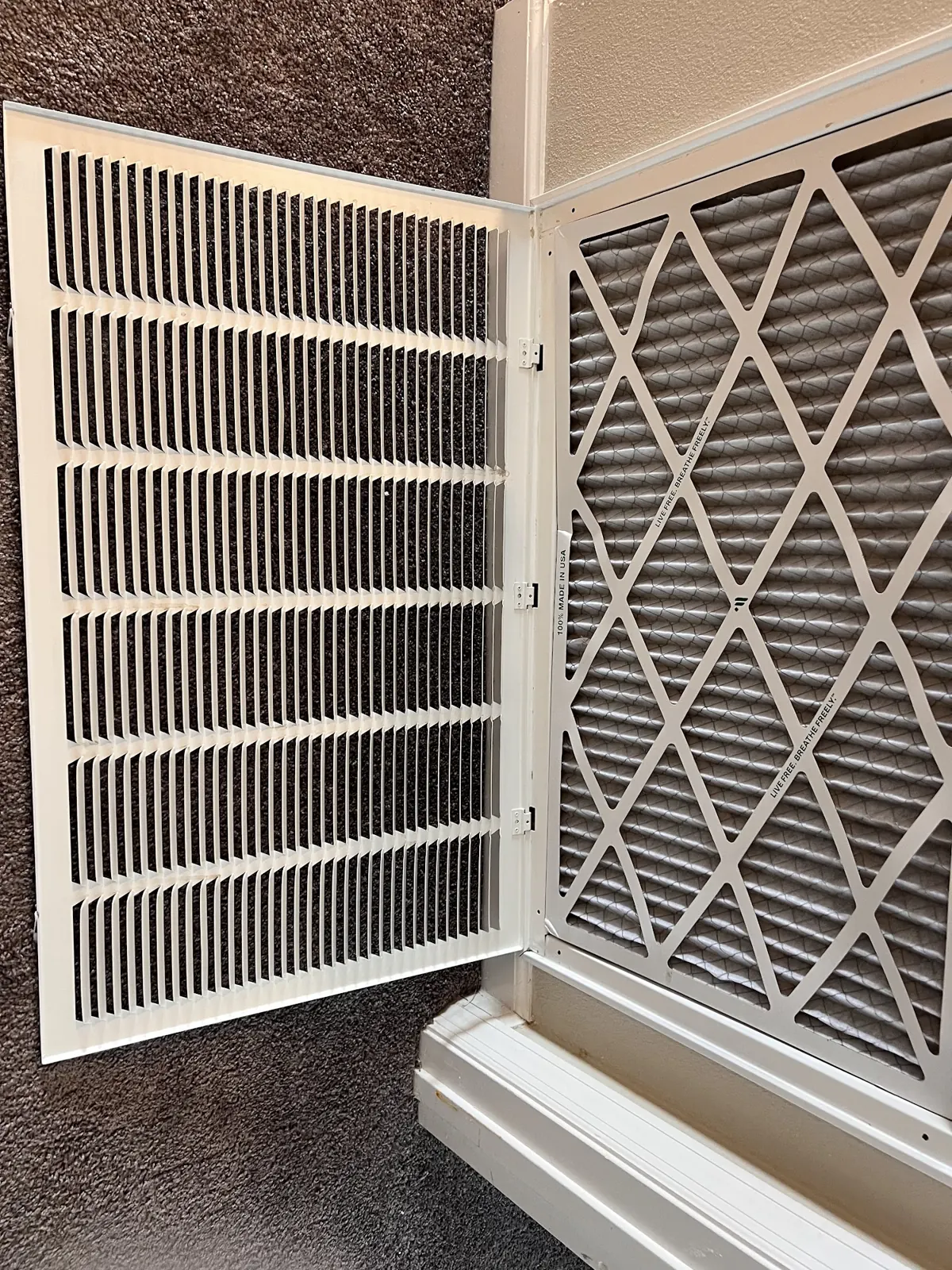
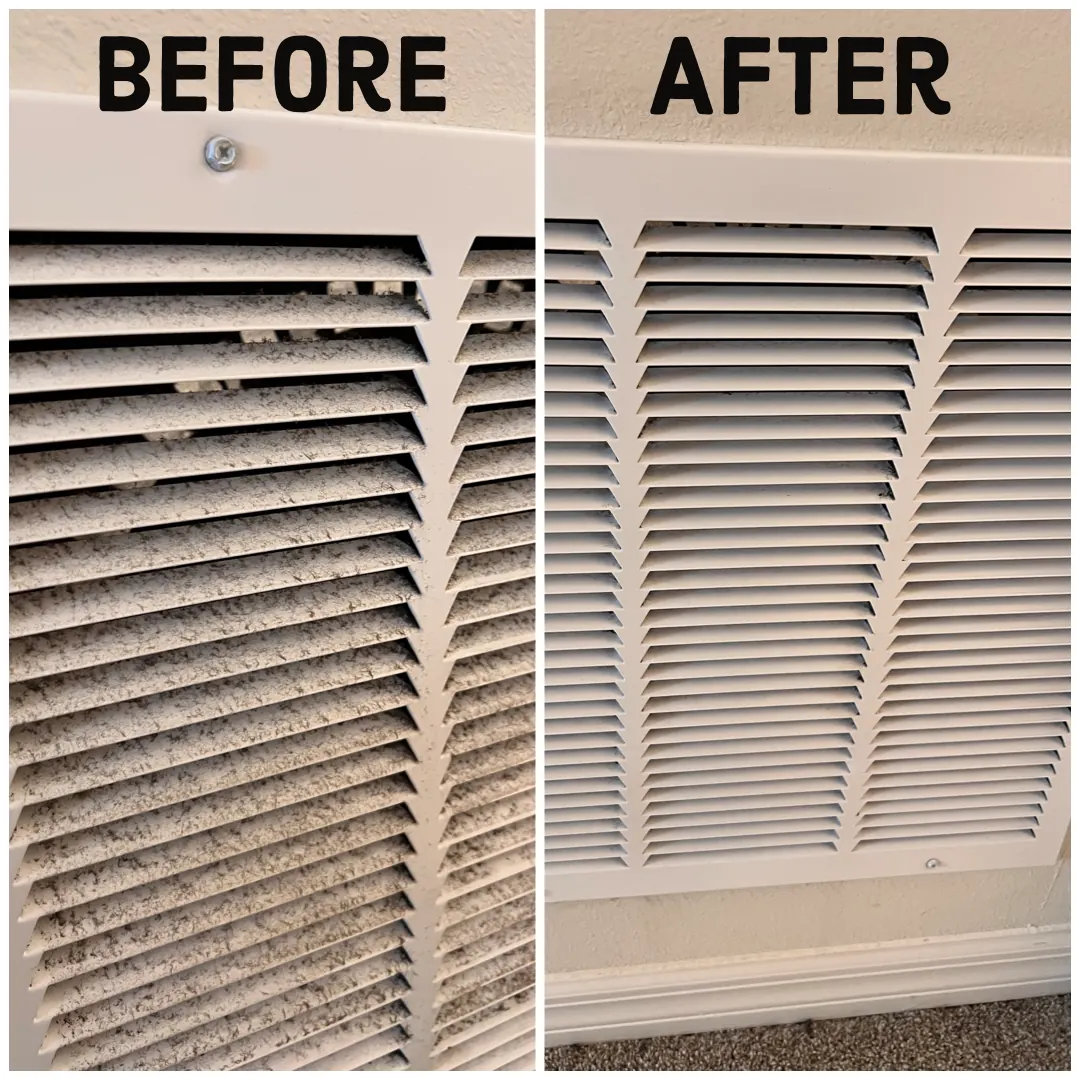
- Look at the return grille. Fuzzy dust on the slats means it needs washing
- Open the air handler closet and look for standing water in or around the pan, rust stains or a wet floor
- Check under every sink with a flashlight for drips, swollen cabinet bottoms or stains
- Look at ceilings and the tops of walls for brown rings or bubbling paint
- Open the washer door and pull back the gasket. Black spots or slime in the folds is a common source
Cleaning steps that remove the odor source
Air fresheners and candles cover a musty smell for an hour. Removing what's holding the moisture and odor is the only thing that makes it go away. Here's the order we'd tackle it in:
- Replace the AC filter and wash the return grille. Most grilles unclip or unscrew, and they wash up with warm soapy water. Let it dry fully before reinstalling
- Wipe supply vent covers in every room, which collect dust and sometimes a damp film
- Empty musty closets, launder or air out what's inside, vacuum the floor and shelves, and leave the doors open for a few days
- Clean the washer: wipe the gasket folds, clean the detergent drawer, run the tub-clean cycle, and leave the door cracked between loads, as LG and Whirlpool both recommend
- Clean the dishwasher filter and run an empty hot cycle, scrub the garbage disposal splash guard, and wipe the fridge door gaskets
- Vacuum mattresses, upholstery and rugs slowly. Baking soda sprinkled on carpet for a few hours before vacuuming can help with light odors
- Wash curtains, throw pillow covers and bedding that have been sitting in a closed room
- Mop hard floors and wipe baseboards, where dust and humidity film settle
If a carpet or rug got soaked and still smells after it dries, it may need professional water extraction or replacement. That's outside what a regular cleaning can fix. The same goes for upholstery and mattresses that were wet for days.
Pets and the musty smell
Pets add their own layer. Dog beds, crate pads and litter areas trap moisture and dander, and in a humid house they start to smell stale faster than you'd expect. Wash pet bedding weekly, vacuum along baseboards where hair collects, and clean up accidents on rugs right away so they don't soak into the pad. A wet dog coming in from a summer storm and lying on the couch is a very Florida source of musty upholstery. Our pet-friendly cleaning tips go into more detail.
When it's an HVAC, leak or mold problem
Cleaning solves a lot of musty smells, but not all of them. Some point to a system or building problem that needs a licensed professional. Call an HVAC contractor if the smell comes from the vents when the system runs, if there's water in the pan or the line keeps clogging, if humidity stays above 60 percent with the AC working, or if the system runs in short bursts and shuts off. Call a plumber or roofer if you find stains, soft drywall or a smell that gets worse after rain.
If you see mold growing on drywall, ceilings or wood, or the affected area is larger than about 10 square feet (the EPA's rough limit for a homeowner cleanup), talk to a licensed mold assessor or remediator. Krystal View Cleaning doesn't do mold remediation or duct cleaning. What we do is the deep cleaning that removes dust, surface mildew and the odor sources hiding in closets, appliances and vents. For shower-specific growth, see our guide on removing mildew from a Florida shower.
Keeping it from coming back
Once the source is gone, prevention is mostly about airflow and humidity. Keep the AC running on a sensible setting year-round, change filters on schedule (more often with pets), and have the condensate line serviced. Run bathroom fans after showers and the range hood while cooking. Keep closet doors cracked. Leave the washer door open. If your home still runs humid with a properly sized, working AC, ask an HVAC pro whether a dehumidifier makes sense for your house.
For rental owners, a musty smell is one of the fastest ways to earn a bad review. A thorough vacation rental cleaning routine that includes airing out bedrooms, rotating linens and checking the washer and fridge between guests keeps the problem from building up.
Need a hand resetting the house?
If the house has been closed for a while or the smell has settled into everything, a deep cleaning is a good starting point. We wipe vents and return grilles, clean baseboards, closets and appliance exteriors, and use non-toxic products that are safe around kids and pets. Contact us for a free estimate, and if we spot signs of a leak or HVAC problem while we're there, we'll let you know.