Most Florida homes have a ceiling fan in nearly every room, and most of them spin for ten or eleven months a year. That's great for the power bill and rough on the blades. Look at a fan from a stepladder and you'll usually find a gray, slightly sticky ridge along the leading edge of every blade, plus a dust bunny sitting on top of the motor housing.
Fans are only the start. Everything above eye level collects the same mix of dust, pollen and pet dander: crown molding, the tops of door frames, AC vents, plant ledges and the corners of vaulted ceilings that are so common in Davenport and ChampionsGate builds. Cleaners call this high dusting. Below is how to do it safely yourself, in what order, how often a Florida home actually needs it, and when it's smarter to hand it off.
Why high spots get dirtier faster in Florida
Three things work against you here. First, runtime. A fan that spins most of the year pulls air across the blades constantly, and the front edge of each blade catches whatever is floating in the room. Second, humidity. Dust in a dry climate stays powdery and falls off with a swipe. In a Central Florida home it picks up moisture and a little cooking grease and turns into a tacky film that a dry duster just smears around. Kitchen and lanai fans are the worst for this.
Third, the houses themselves. A lot of newer homes and vacation rentals in the Disney-area belt have ten-foot ceilings, two-story foyers and plant shelves over the kitchen cabinets. Those surfaces sit out of sight, so they go months without attention, and when the AC kicks on the dust that's up there gets moved around the house. Pollen season makes all of it heavier from about February through April.
What you need before you climb
Gather everything first so you're not climbing up and down the ladder for one more rag. Nothing here is expensive.
- An old pillowcase (one per two or three fans; you'll shake it out between fans)
- Four or five clean microfiber cloths
- An extendable duster with a microfiber or lambswool head, for anything you can't reach with your hands
- A sturdy stepladder with a rating label (look for the ANSI A14 label) tall enough that you don't need the top steps
- A spray bottle with warm water and a few drops of dish soap
- A vacuum with a brush attachment, plus an extension wand if you have one
- An old sheet or towel to cover the bed or sofa under the fan
- A dust mask and safety glasses if anyone in the house has allergies
How to clean a ceiling fan, step by step
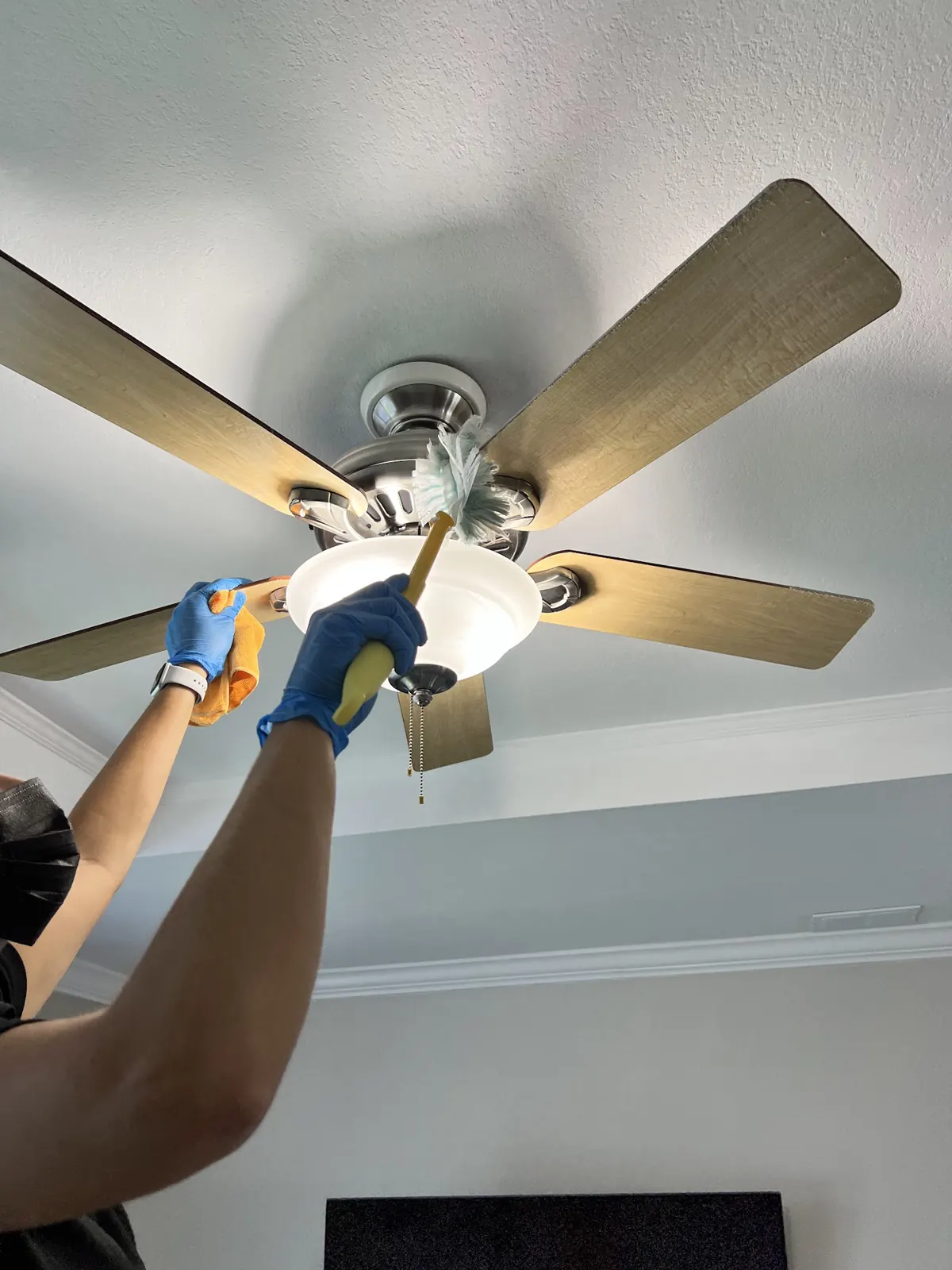
The pillowcase trick is the reason this job no longer has to rain dust on your bed. You slide the case over a blade, press up and down gently, and pull it back toward you. The dust stays inside the case instead of drifting onto the furniture. Do one blade at a time, then come back with a damp cloth.
- Turn the fan off at the wall switch and wait until the blades stop completely. If the fan has a light kit, leave the bulbs off for a while so they cool down.
- Cover the bed, sofa or floor underneath with a sheet.
- Set the ladder beside the fan, not directly under it, so you can reach the blade without leaning back.
- Slide the pillowcase over each blade and pull it back slowly, pressing on the top surface where most of the buildup sits.
- Mist a microfiber cloth (not the blade) with the soapy water, wipe the top and underside of each blade, then follow with a dry cloth. Wood and composite blades can swell if they get soaked, so keep it damp, not wet.
- Wipe the motor housing, the downrod and the ceiling canopy with a barely damp cloth. Never spray cleaner into the vents on the motor.
- Unscrew glass shades and globes, wash them in warm soapy water at the sink, and dry them completely before putting them back. Wipe the bulbs with a dry cloth only.
- Wipe the pull chains and switch housing, which collect fingerprints along with dust.
- Shake the pillowcase out outside, fold up the sheet carefully, and vacuum the floor last.
Ladder safety that actually matters
Falls from stepladders and chairs are how a ten-minute chore turns into an urgent care visit. The American Ladder Institute, which writes the ANSI ladder standards, keeps the rules simple, and they're worth following every time.
If a fan wobbles hard, hums, smells hot or has a loose canopy, don't clean it and don't tighten anything while you're up there. That's a job for an electrician or a handyman, and cleaners shouldn't be touching wiring or mounts either.
- Open the stepladder fully and lock the spreaders before you climb. Never use it folded and leaned against a wall.
- Keep three points of contact while climbing: two feet and a hand, or two hands and a foot.
- Don't stand on the top step or the top cap. If you need them, the ladder is too short.
- Keep your belt buckle between the side rails. When you have to reach, climb down and move the ladder.
- Skip the dining chair and the kitchen stool. They tip, and swivel stools spin.
- Never put a ladder on stairs to reach a foyer fan. That's the one high-dusting job we'd tell anyone to hire out.
High dusting the rest of the room
Once the fans are done, work the rest of the room from the ceiling down. Gravity is on your side: anything you knock loose lands on surfaces you haven't cleaned yet, and the floor gets vacuumed last. A microfiber head on an extension pole handles most of this from the floor, which is safer and faster than moving a ladder around the room.
For vaulted ceilings, run the duster along the beams and into the peak, where spiders like to build. A vacuum with a brush tool and an extension wand pulls cobwebs off textured ceilings without smearing them. If you see dark spots or fuzzy patches on the ceiling instead of dust, stop. That may be mildew, which points to a humidity problem; our guide to a musty smell in a Florida home walks through the usual causes.
- Ceiling corners and cobwebs, especially above windows and in closets
- Crown molding and the top edge of door frames and window casings
- Plant shelves, tall bookcases and the tops of kitchen cabinets (these often need a damp, soapy wipe because of cooking grease)
- Light fixtures, chandeliers and recessed light trim
- Smoke detectors: dust the outside cover gently, and don't take them apart
- AC supply vents and the return grille: vacuum with the brush tool, then wipe with a damp cloth
- Curtain rods, valances and the top rail of blinds
Don't skip the vents and the return grille
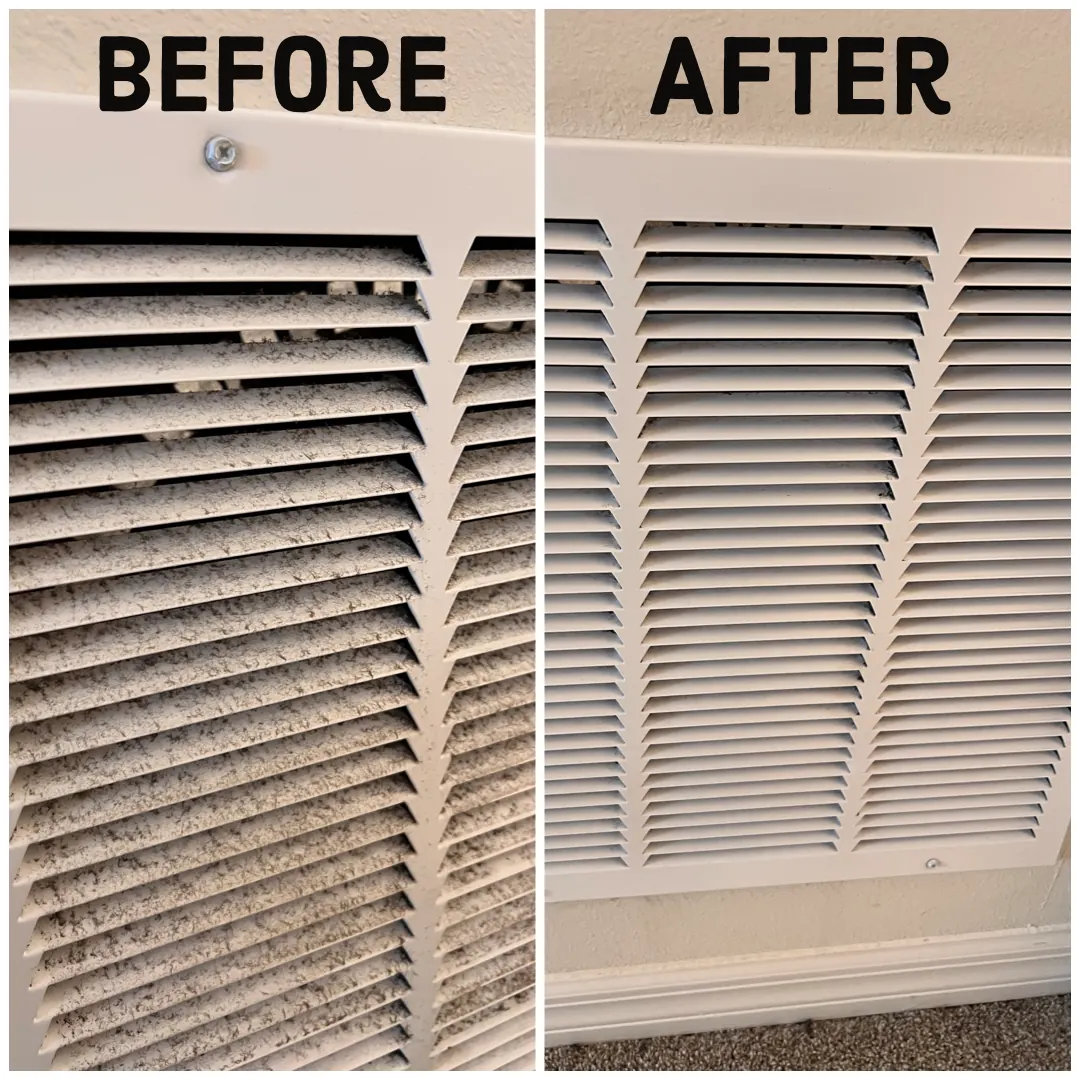
In a Florida house the AC runs most of the year, which means the return grille is working as a giant dust magnet. A dirty one is easy to spot: a gray fuzz across the slats and dark streaks around the frame where air pulls in. Cleaning the grille won't replace changing the filter behind it, but it keeps that dust from getting knocked back into the room every time someone walks past.
Vacuum the slats first so you aren't turning the dust into mud, then wipe each slat with a damp microfiber. Supply vents on the ceiling get the same treatment. If there's black speckling on a supply vent, wipe it with a mild soap solution, let it dry, and keep an eye on it; recurring spots usually mean moist air is condensing there.
How often a Florida home needs it
This is the schedule we'd suggest for a lived-in home in Central Florida. Adjust it up if you have pets, allergies or a house near construction, and down if a room barely gets used. For the bigger picture on cleaning frequency, see how often to schedule house cleaning in Florida.
- Bedroom and living room fans: a quick dust every two to four weeks, a full blade-and-light clean every couple of months
- Kitchen and lanai fans: a damp wipe monthly, because grease and humidity make the buildup sticky
- Vents and return grilles: monthly, and every time you change the AC filter
- Crown molding, tall shelves and ceiling corners: every three months
- Extra round at the end of pollen season, after any remodel, and before you list or move out of a house
- Vacation rentals: check fans and vents at every turnover, since guests notice and photograph dusty blades
Lanai and outdoor fans
Fans on a screened lanai or covered patio live a harder life. They catch pollen in spring, lovebugs in late spring and late summer, and they stay damp from afternoon storms. Dust turns into grime that won't come off with a pillowcase. Use a cloth dampened with mild dish soap and water, wipe the blades and housing, rinse the cloth, wipe again, and dry them. If you see mildew spots, clean them now. Left alone through a wet summer, they spread across the blades. Our pollen season cleaning guide covers the rest of the lanai.
When it makes sense to hire it out
Plenty of people handle their fans themselves and only want help with the parts that are awkward or risky. That's a reasonable split. Hiring out makes sense when the ceilings are vaulted or the fan hangs over a staircase, when climbing a ladder isn't a good idea for you, when you're getting a home ready for guests or a sale, or when you manage a vacation rental and need fans checked on every turn.
At Krystal View we offer high dusting and ceiling fan cleaning as part of our add-on cleaning services, and it's built into every deep cleaning. We use extension poles and ladders with the same safety rules above, and if a foyer or great-room ceiling is taller than we can reach safely, we'll tell you that up front instead of improvising. We don't do electrical work, fan repairs or exterior cleaning. Hosts in the Disney-area belt often add fans and vents to their vacation rental cleaning checklist a few times a year.
If you'd like fans and high dusting added to your next visit, request a free estimate or call +1 877-754-5614. Tell us roughly how many fans and how high the tallest ceiling is, and we'll plan the visit around it.