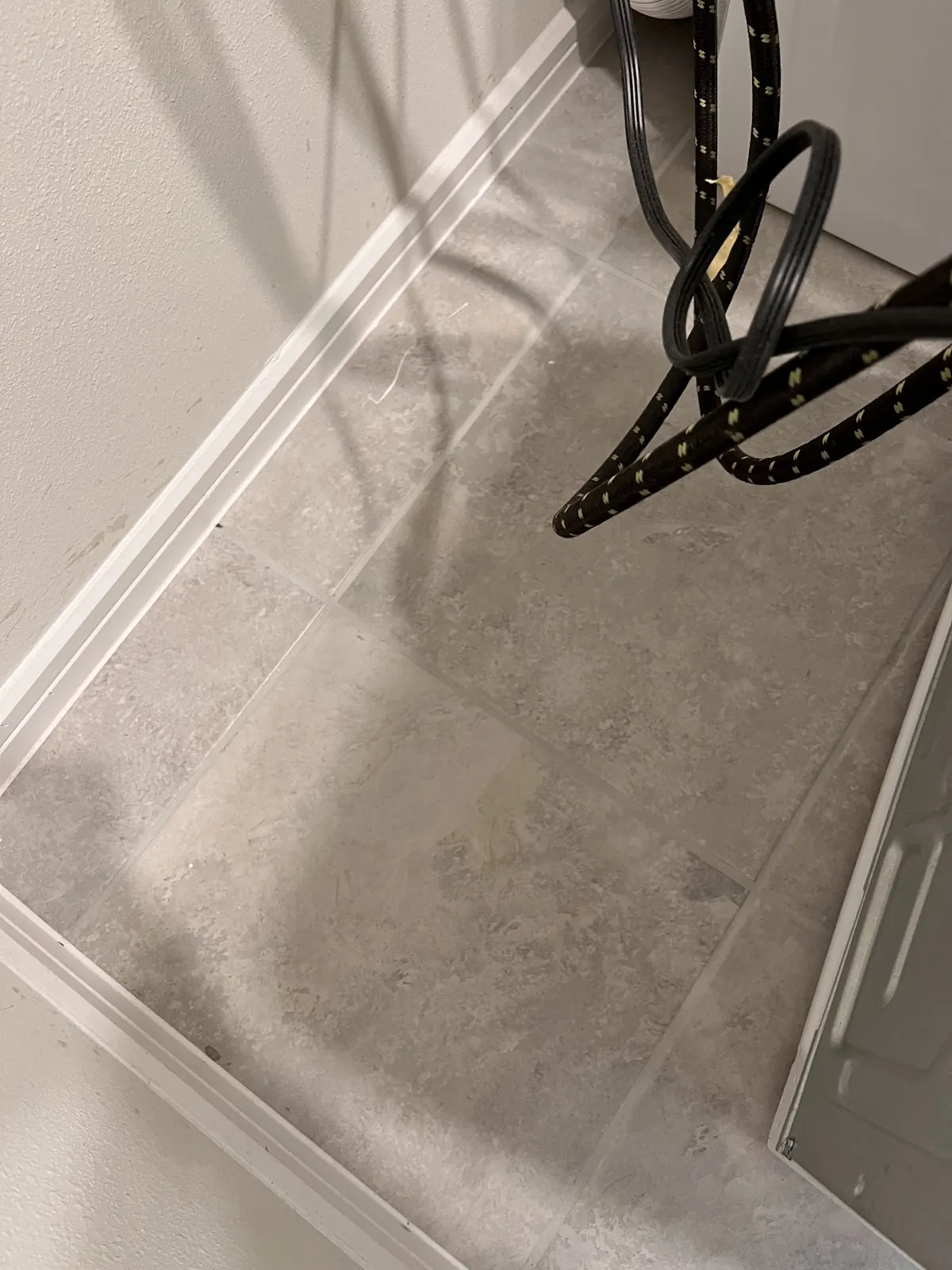
Every spring the same yellow-green film shows up on Central Florida lanais, car hoods, patio tables and the screens around the pool. Wipe it off on Monday and it's back by Wednesday. Inside, it settles on window sills, packs into sliding door tracks and rides in on shoes, pets and laundry.
You can't stop pollen season, but you can keep most of it outside and clean in a way that removes it instead of stirring it back into the air. Here's when the season actually peaks around Polk, Osceola and Orange counties, what to do at the door and the AC, the cleaning order that works best for allergy sufferers, and how to handle the lanai and screened porch without a pressure washer.
When pollen season hits Central Florida
UF/IFAS describes Florida's pollen season as running roughly January to June, with a UF/IFAS Extension agent in Hillsborough County calling March and April the height of it. For most Central Florida homes, the heavy cleaning stretch is about February through April. Oaks are the main allergy trigger; laurel oaks start early, and live oaks follow a few weeks later. Pine pollen tends to peak earlier, around February in Central Florida according to public radio weather coverage, and it's the visible yellow dust you see on cars and lanais. UF/IFAS rates pine as fairly low on the allergy scale, but it still makes a mess.
Grass pollen picks up again in summer, and afternoon rain knocks pollen out of the air for a while. For planning purposes: keep up with light cleaning during the peak, then do your big top-to-bottom reset once the oak drop slows down in late April or May. Cleaning the lanai screens in mid-March only to watch them coat over again is a lot of wasted effort.
Keep it outside first
Every bit of pollen you stop at the door is pollen you don't have to dust later. None of these steps take long, and together they make a real difference in how fast the house gets dusty again.
- Put a scraper mat outside every entry and a washable mat inside, and shake or wash both weekly during the peak.
- Make it a shoes-off house for the season, with a basket or rack right by the door.
- Keep windows and sliders closed on windy, dry days and let the AC do the work. Rain days are the better time to air the house out.
- Check the AC filter monthly in spring. The EPA's guide to home air cleaners suggests a filter rated at least MERV 13, or the highest your system can handle; ask your HVAC technician if you're not sure.
- Dry laundry in the dryer instead of on a line or the lanai rail. UF/IFAS Extension in Polk County also suggests changing clothes and showering after time outdoors.
- Wipe dogs down with a damp towel when they come in. A golden retriever carries a surprising amount of pollen in its coat, and our pet-friendly cleaning tips cover the hair that comes with it.
- Treat the garage like an entry. Sweep it, and don't leave the garage door open all afternoon.
An allergy-friendly cleaning order
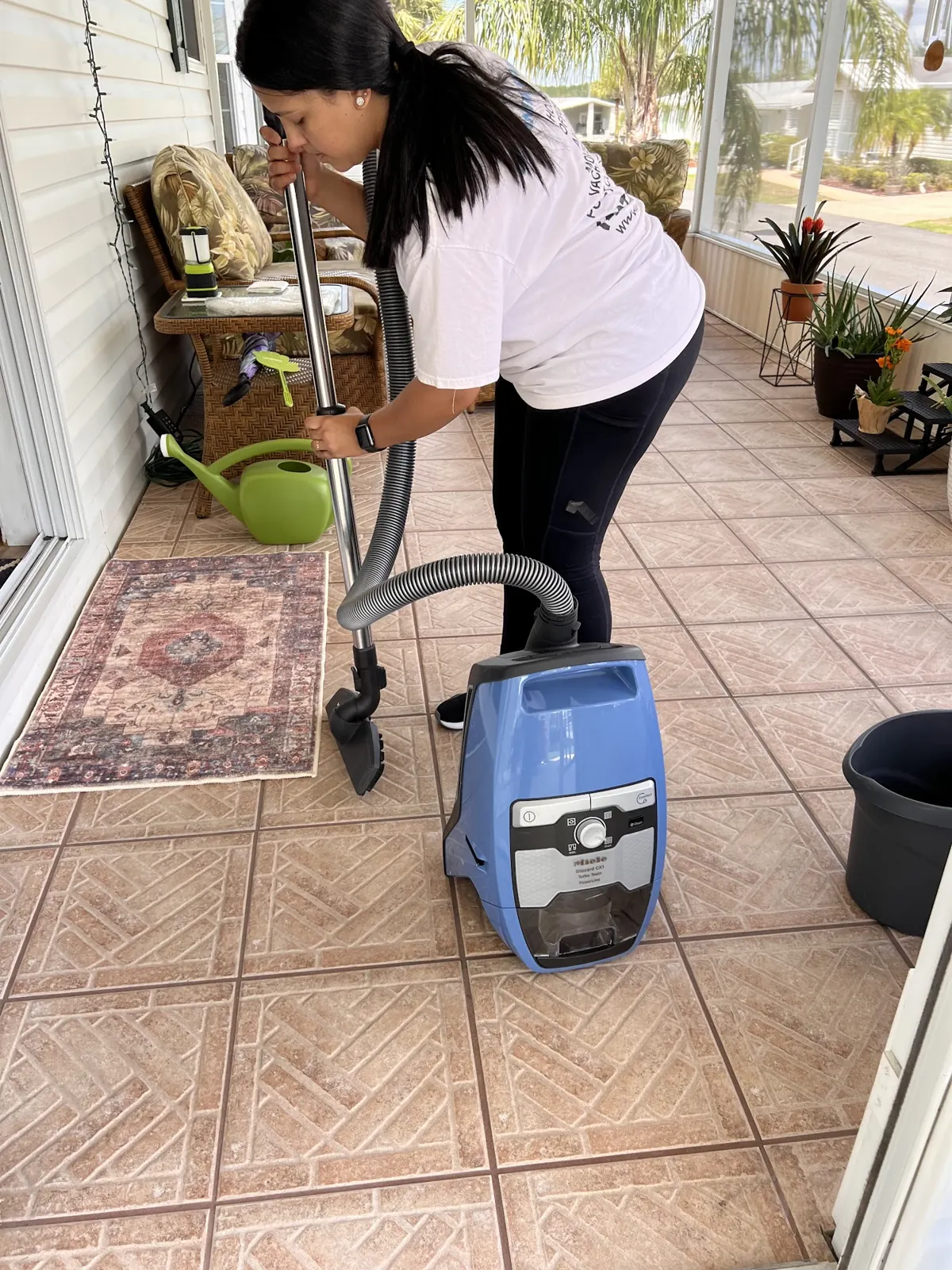
Pollen grains are light. A feather duster or a dry rag just launches them into the air, where they float for a while and land right back where you started. Damp microfiber traps them. So does a vacuum with a sealed HEPA filter, as long as you empty it outside. The other rule is top to bottom: clean high surfaces first so anything that falls lands on areas you haven't done yet.
If anyone in the house is sensitive, have them out of the room while you dust, or wear a basic dust mask yourself. Skip heavily scented sprays, which can bother irritated noses on top of the pollen. A gentle cleaner like Bon Ami and plain water handle most of this.
- Ceiling fans and light fixtures first. Our guide to cleaning ceiling fans and high dusting walks through the safe way.
- AC supply vents and the return grille: vacuum, then damp wipe.
- Tops of door frames, shelves and picture frames with a damp microfiber cloth, folded so you can flip to a clean side.
- Window sills, blinds and the tops of baseboards, where pollen settles near every window and slider.
- Upholstery and cushions with the vacuum's brush tool.
- Hard floors: HEPA vacuum first, then damp mop. Mopping first turns pollen into a smeared film on tile.
- Bedding: wash sheets and pillowcases weekly in warm or hot water during the peak (check fabric labels).
Lanais and screened porches
The lanai is where pollen season really shows. Screens catch it like a filter, and every breeze shakes some loose onto the furniture and the tile. The trick is to remove it dry first. Wet pollen turns into a yellow paste that sticks to everything.
Start with a broom, a leaf blower on its lowest setting, or a shop vacuum to clear loose pollen off the floor, furniture and screen frames. Then go over the screens with a soft brush and a garden hose on a gentle spray, top to bottom, with mild dish soap in a bucket for any grimy sections. Skip the pressure washer. High pressure can stretch or tear screen mesh and blow out the spline, and it pushes water where you don't want it.
For patio furniture, wipe frames and tabletops with soapy water, rinse the cloth often, and dry everything. Vacuum cushions and spot-clean them, then let them dry completely in the sun before stacking them, since damp cushions grow mildew in a Florida spring (the same moisture is behind most cases of a musty smell in a Florida home). Sweep the pool deck and skim the pool more often during the peak; pollen collects along the waterline. Do the deep lanai reset once in late spring, and in between, a weekly sweep and wipe keeps it livable.
Window sills, window tracks and sliding door tracks
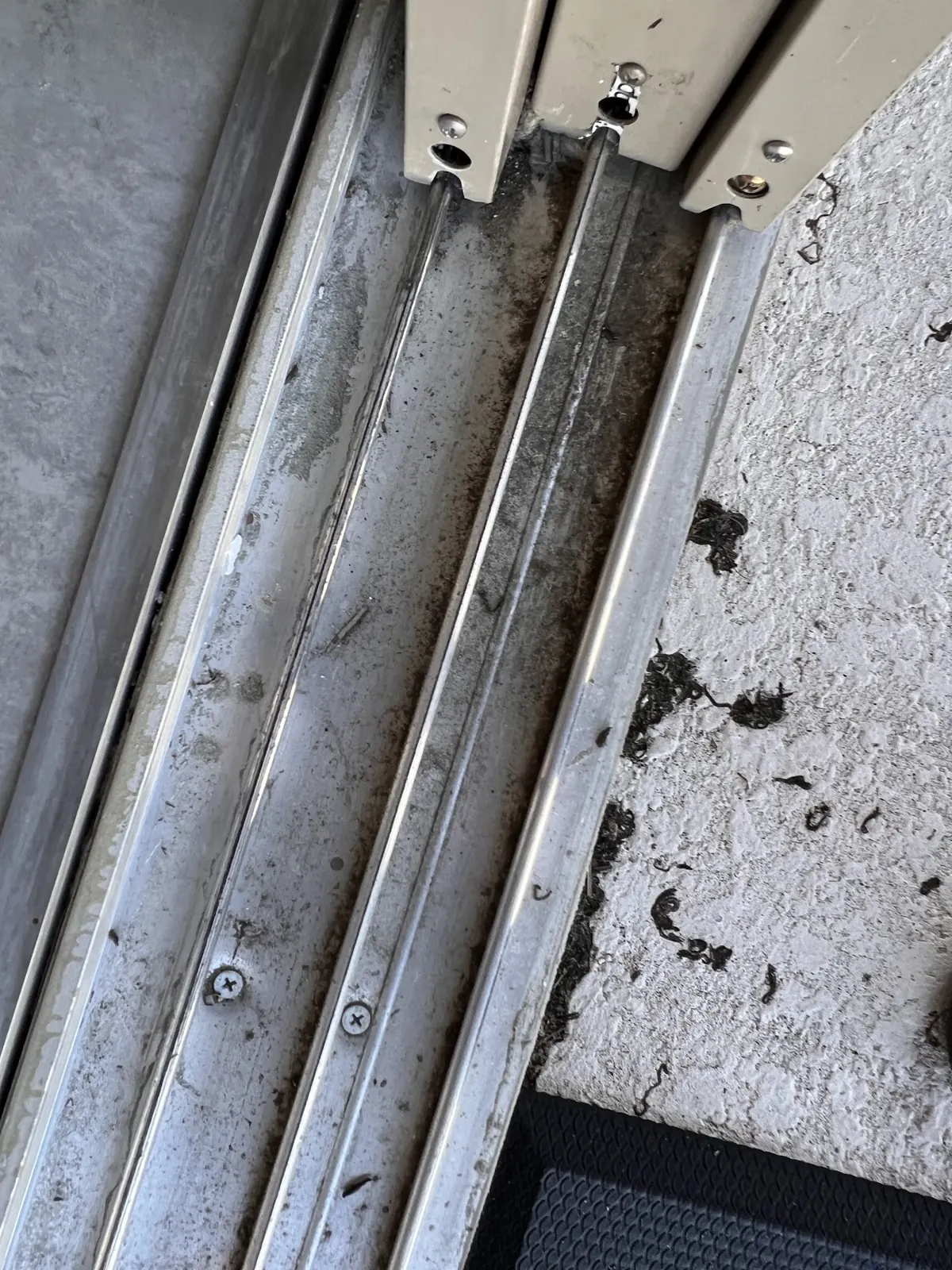
Tracks are where pollen, sand and dead bugs end up, and in a Florida house the sliding glass door to the lanai gets opened dozens of times a day. Once that grit builds up, the door starts to drag and the debris gets tracked inside.
Clean them dry first, then damp. Vacuum the track with a crevice tool, loosen packed corners with an old toothbrush, and vacuum again. Then wrap a damp microfiber cloth around a flat tool like a putty knife and run it along each channel. Check that the small weep holes or slots at the bottom of the frame are clear so rainwater can drain. Window sills get the same order: vacuum, then damp wipe, then dry. If your window screens pop out easily, rinse them on the lanai floor with the hose while you're out there.
Lovebugs: the second wave
Just as the pollen tapers off, lovebugs show up. UF entomologists describe two peaks a year, roughly April to May and again August to September, with each flight lasting a few weeks. They're harmless, but they collect on screens, light-colored walls near doors, light fixtures and the pool.
At home, the main thing is to clean them off screens, sliders and window frames promptly with water and a soft brush. Fresh ones rinse off easily. Once they've dried on in the sun, they take more scrubbing. Keep the sliding door closed when a swarm is active, and run a vacuum along the tracks afterward.
When a professional reset is worth it
The end of pollen season is one of the best times of year for a full deep cleaning: fans, vents, baseboards, blinds, tracks and every surface the spring left a film on. If allergies make the dusting itself miserable, regular recurring cleaning every week or two through February, March and April keeps pollen from building up between visits.
Krystal View can add lanai and patio cleaning, interior windows, blinds and high dusting through our add-on cleaning services. We sweep, vacuum and wipe lanais and screened porches by hand; we don't do pressure washing or exterior window washing, and we'll tell you if a job needs one of those trades instead. We use non-toxic, pet- and kid-safe products, which matters when the person with allergies is the one who'll be home after we leave.
If you'd like a post-pollen reset on the calendar, request a free estimate or call +1 877-754-5614. We clean across Polk, Osceola, Orange, Lake and Seminole counties.