

If you dust on Saturday and see a gray film on the TV stand by Wednesday, your house isn't dirtier than anyone else's. It's doing what Florida houses do. The AC runs most of the year and pulls the whole house's air through one filter. Ceiling fans keep it moving. Sand comes in on shoes, pollen arrives on everything from about February to April, and many homes around Davenport, Clermont and Kissimmee are new builds still shedding construction dust.
House dust is a mix of tracked-in soil, outdoor particles, fibers, skin flakes and pet dander. University of Arizona researchers (Layton and Beamer, 2009) estimated that more than 60 percent of house dust comes from outdoors. That's useful, because it means the biggest wins happen before you pick up a cloth: stop dust at the door and catch it in the AC. Then dust in an order that doesn't undo your own work.
Why your house is so dusty: the usual Florida causes
Work down this list. The items at the top do the most damage, and if the AC isn't catching dust, everything below it is just cleanup.
- An AC filter that's overdue, the wrong size or the wrong rating
- Gaps around the filter, or leaky return ducts pulling attic or garage air into the system
- Ceiling fans flinging what settles on the blades
- Sand and grit tracked in through the garage and the lanai slider
- Pollen season, plus sliders and windows left open on windy days
- New construction: drywall dust inside the house and an unfinished neighborhood around it
- Pets, bedding, throw pillows and rugs shedding fibers
- Dry dusting with a feather duster, which moves dust instead of picking it up
Your AC filter is the dust filter for the whole house
In a Central Florida home the air handler runs for long stretches most of the year. Every time it runs, the house's air passes through one filter. That makes the filter your best dust control, as long as it's doing its job.
Filters are rated by MERV (minimum efficiency reporting value), the scale from ASHRAE Standard 52.2. The EPA explains that MERV describes how well a filter captures particles between 0.3 and 10 microns, and that a higher number traps more of them. If you're upgrading, the EPA recommends at least MERV 13, or as high a rating as your system fan and filter slot can accommodate. That second half matters. Some older or smaller systems struggle to pull air through a dense filter, so ask your HVAC technician what yours can handle before jumping from a thin fiberglass filter to MERV 13.
Then keep it fresh. ENERGY STAR says to check the filter every month, especially in the heavy-use months, change it if it looks dirty, and change it at least every three months no matter what. In a Florida summer with a dog in the house, a month is often enough to turn a filter gray.
- Copy the exact size printed on the old filter's frame before you shop
- Point the airflow arrow toward the air handler, away from the room
- Check the edges: if the filter slides around in the slot, air and dust are going around it
- Write the install date on the frame with a marker
- Vacuum the grille with a brush attachment before you close it up
When the filter is right and the dust keeps coming
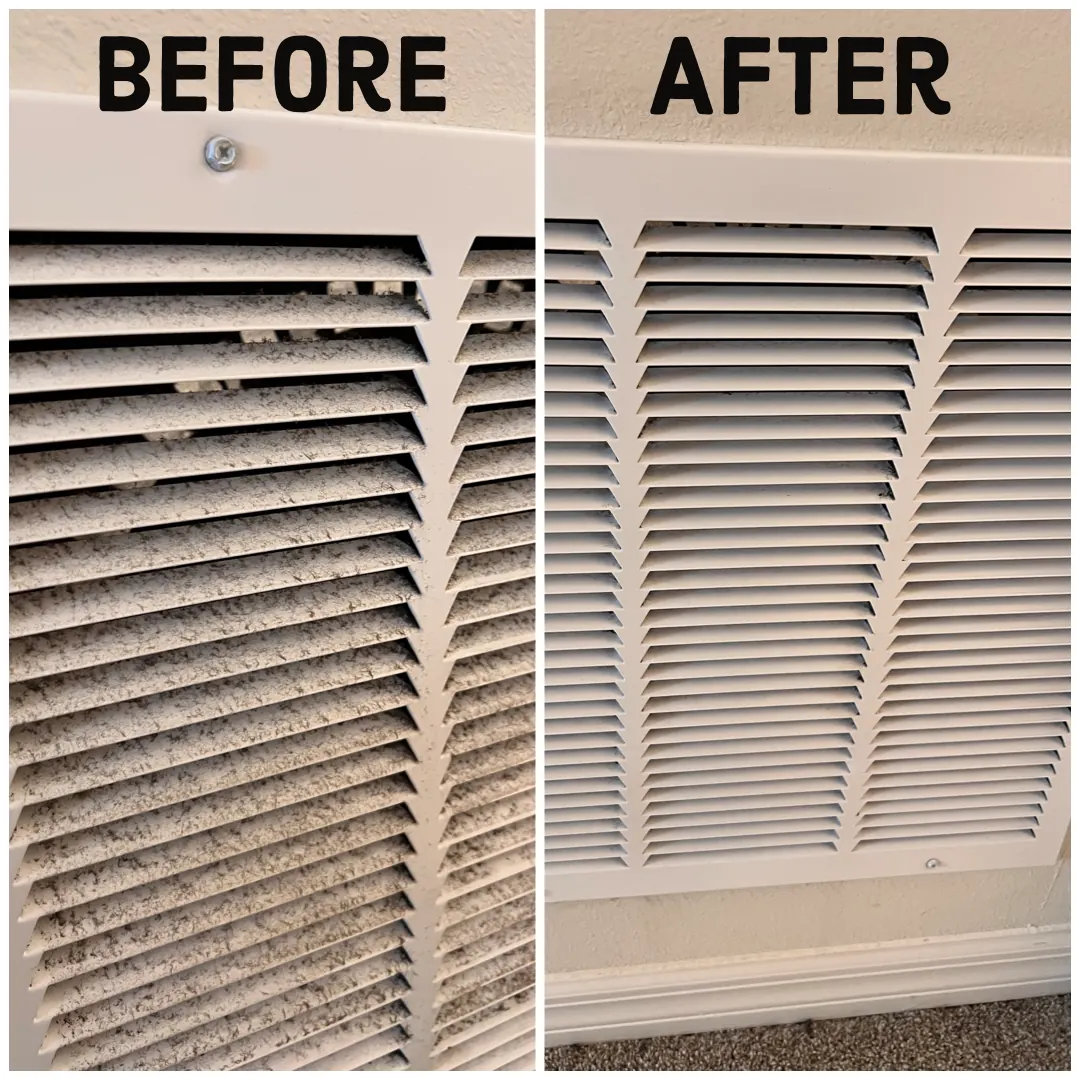
Look at the ductwork next. ENERGY STAR estimates that in a typical house, about 20 to 30 percent of the air moving through the duct system is lost to leaks, holes and poorly connected ducts, and its duct-sealing flyer lists "dusty house" among the warning signs. Leaks on the return side, where the system pulls air back in, can draw unfiltered air from an attic or garage. Sealing ducts is a job for an HVAC contractor, but a cleaner often spots the clues first: a dark halo around a return or supply vent, dust streaks on the ceiling around the grille, or a filter that's black around the edges and clean in the middle.
Air returns and ceiling fans: two dust magnets
The return grille is the large vent, usually in a hallway ceiling or wall, where many Florida homes keep the filter. All the air in the house is pulled toward it, so the grille and the surface around it collect a gray coat fast. Vacuum it monthly with a brush attachment, then wipe it with a damp microfiber cloth. Do the supply vents in each room at the same time.
Ceiling fans run nearly nonstop in most Florida homes, and the leading edge of each blade grows a felt of dust. Once it's thick, the fan throws clumps onto the bed and the floor. Clean the blades every few weeks with an old pillowcase slid over each blade or a damp microfiber cloth, with the fan switched off. Our ceiling fan high-dusting guide covers ladder safety and lanai fans.
Stop sand and pollen at the door
Much of Central Florida sits on sandy soil. Sand is heavier than household dust, but it grinds into grout, scratches floors and gets kicked back up as fine grit. Most of it comes in on shoes, through the garage door from the car, and across the lanai from the pool deck.
- A coarse mat outside each door and an absorbent one inside; shake the outside mat weekly and wash the inside one when it stops looking clean
- Shoes off at the door, with a bench or tray so people actually do it
- A towel or washable mat at the lanai slider for wet feet and pool-deck sand
- Vacuum or dry-mop the entries instead of sweeping, which throws fine grit back into the air. State Farm's dust guide suggests vacuuming weekly and twice a week in high-traffic areas
- Keep windows and sliders shut on windy days and during peak pollen, and vacuum the slider track
- Wipe dogs' paws at the door and brush pets outside
Pollen weeks need their own routine
Central Florida's pollen season runs roughly February to April, with pine and oak leading, and a yellow film on the lanai furniture is the early warning. During those weeks the AC filter loads faster, so check it every couple of weeks, keep the house closed up, and wipe sills and sliders with a damp cloth rather than a dry one. Our pollen season cleaning guide has an allergy-friendly order for those weeks, plus screens and lanai tracks.
Humidity, fabrics and dust mites
Florida humidity makes dust heavier, so it settles out of the air faster, but damp air also feeds dust mites in bedding, mattresses and upholstered furniture. The American Lung Association recommends keeping indoor humidity below 50 percent and washing bedding weekly in hot water, at least 120 degrees F. Your AC is doing most of the dehumidifying already, and a cheap hygrometer will tell you whether it's keeping up. If the house reads high and smells a little stale, our guide to the musty smell in Florida homes covers what to check.
Fabric is the other quiet source. Throw pillows, heavy drapes and deep-pile rugs shed fibers and hold dust. You don't have to strip the house bare. Wash what's washable on a schedule, vacuum upholstery with the brush tool, and take small rugs outside to shake.
New-build dust that keeps coming back
If you bought new construction in one of the growing communities around Davenport, ChampionsGate or Clermont, you may see dust reappear for months. Part of it is indoors: fine drywall and sanding dust that settled into cabinet interiors, closet shelves, the tops of door frames, vents and the AC system. Part of it is outdoors, when nearby lots are still being graded and built and dry sand blows down the street.
For the first few months, check the AC filter every two to four weeks, clean the return grille and every supply vent, and do one thorough top-to-bottom pass that includes the inside of cabinets and drawers. Builder cleans vary, and many don't reach inside every cabinet. Our article on how long construction dust takes to settle explains why it keeps resettling after the work stops.
Dust in the right order: top to bottom, damp not dry
Gravity sets the order. Whatever you knock loose falls onto what's below, so start high and finish with the floor. Use microfiber that's slightly damp. State Farm's guide makes the same point we would: feather dusters and dry rags spread dust instead of capturing it.
- Switch off the ceiling fans so you're not chasing dust around the room
- Fan blades, light fixtures, crown molding and the tops of door frames
- Supply vents and the return grille
- Tops of cabinets, tall shelves and the top of the fridge
- Blinds, window frames and sills
- Picture frames, lamps, TVs and electronics (dry microfiber on screens)
- Tables, counters, nightstands and shelves
- Baseboards and the bottoms of doors
- Vacuum with a HEPA-filter vacuum, then mop hard floors, and turn the fans and AC back on so the filter catches what's still in the air
A simple dust-control routine
A whole-house pass like the one above is the core of a deep cleaning visit. Keeping dust from building back up is where a recurring cleaning schedule helps, because dust that's wiped every week or two never gets thick enough to smear. If the high work is the part you'd rather hand off, Krystal View can add ceiling fans, blinds and baseboards to a visit as add-on services. Ask for a free estimate and tell us where the dust collects fastest.
- Weekly: damp-dust surfaces, vacuum entries and high-traffic floors (twice a week with pets or a pool), wash bedding in hot water
- Every few weeks: fan blades and the return grille
- Monthly: check the AC filter, vacuum upholstery and under beds
- At least every three months: replace the AC filter, dust blinds and baseboards, wipe cabinet tops and door frames
- Twice a year: wash curtains, wipe inside cabinets and closets, clean light fixtures

